

At our March meeting, we were entertained by Ed Flint a Head Gardener, in a large private Sussex garden, who talked about growing roses and particularly about how to display them to their best. The talk was interactive and engaging and members asked questions during the talk and at the end. He showed us, through some beautiful slides, how to use roses in mixed planting; giving examples of good plants to contrast with or compliment the colour of different roses. Most importantly he gave examples of how the structure and shape of accompanying plants can be used to show off the roses.
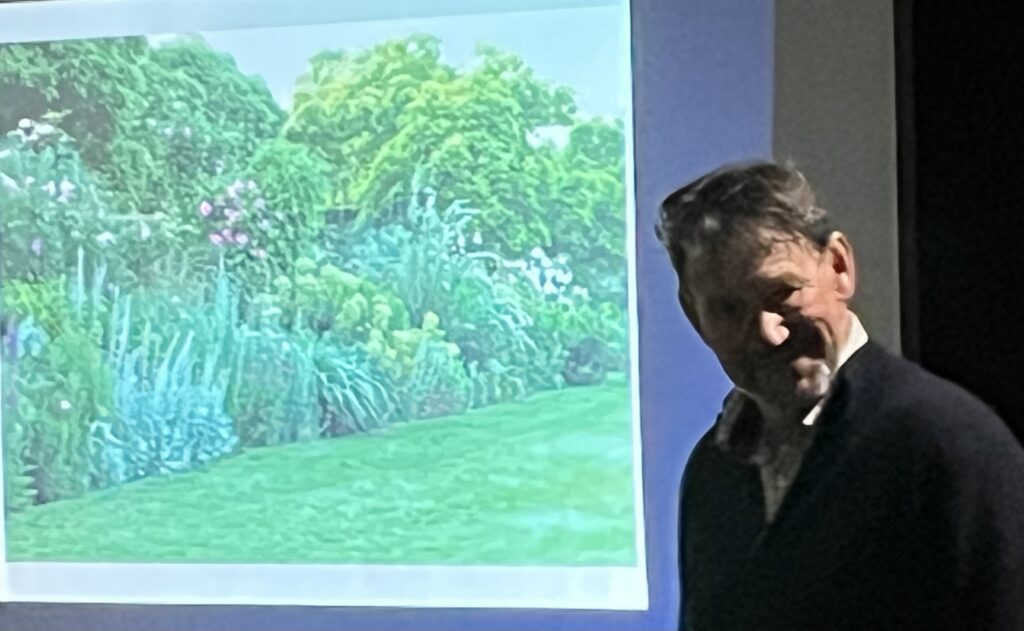
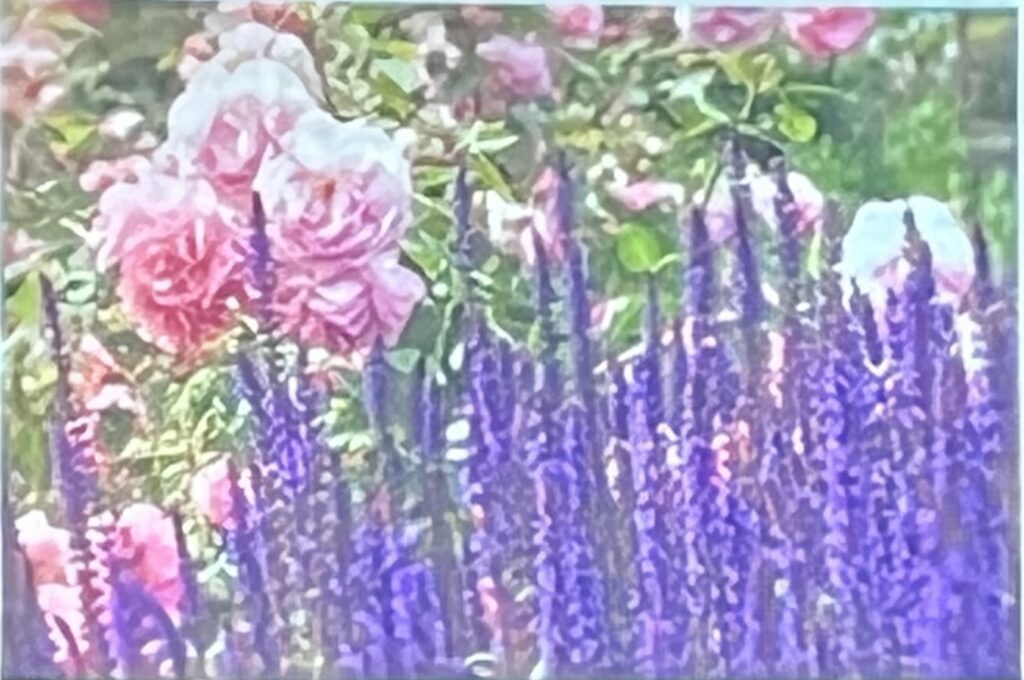
His first few slides showed the unattractiveness of rose gardens when they are grown as a monoculture with no other plants – although pretty when in bloom – they do not look good in winter and their ankles & legs (as Ed called them) are exposed. In addition they are prone to more disease. He recommended growing roses in groups of three and using bended hazels or bamboo to grow the stems across so that they flower more along the stems and they look impressive.

In terms of colour Ed used as examples blue plants like Salvia, Nepeta and Lavender to compliment with roses as there are no true blue roses. He recommended using low growing plants to cover the lower stems of a rose such as Saxifrage, Erigeron (which has a schedule 9 notice), Forget-me-nots and Geum. Ed made the point that, when deciding which plants to plant with roses, structure shape and texture are more important than colour. He quoted Beth Chatto, who he knew well, who said think of the garden as a city roofscape with different shapes – tower, spire, dome, pitched & flat roofs and allow plants to echo that view. He then showed us some beautiful slides of plants echoing some of those shapes, like Delphiniums, Euphorbia, Eremus, Nigella, Anthericum, Larkspur and Opium Poppies.
To view the full list of Ed’s slides with the name of the roses and their accompanying plants click on the link below.