Horatio’s Garden at Stanmore

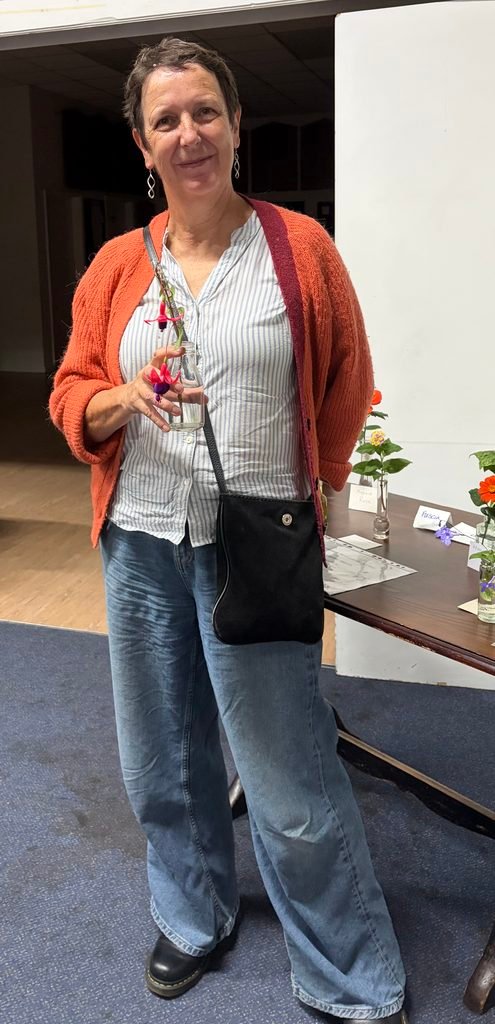
Volunteer Liz and Lily Schleiker Blythe

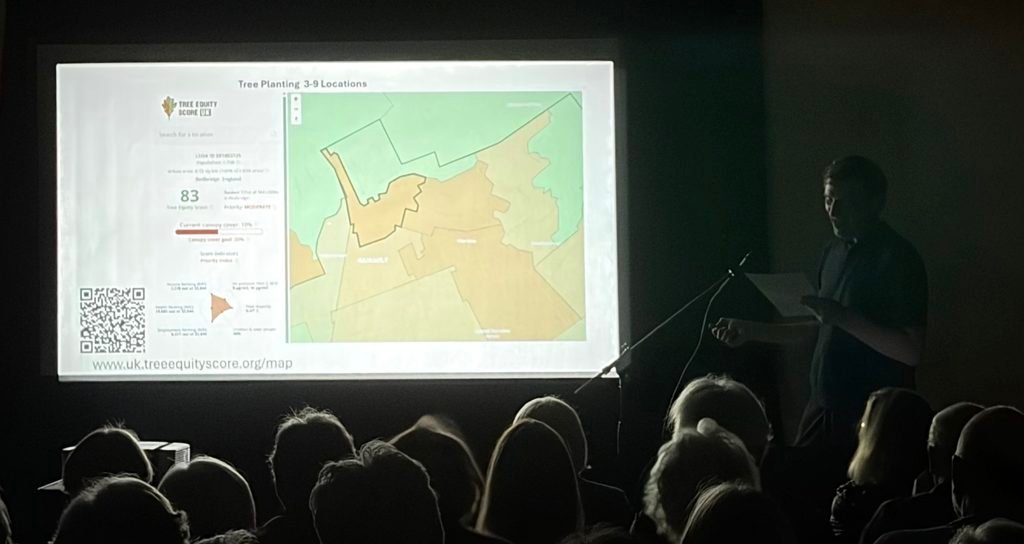
Lily Schleiker Blythe, the Head Gardener at Horatio’s Garden, Stanmore Hospital, gave a fascinating talk to the February meeting of Aldersbrook Horticultural Society.  She told us how she gave up a career in TV production to retrain as a gardener.  She had always been interested in nature and as a small child, helped her grandparents on their allotment.  Lily trained at Capel Manor and as part of the WRAG (Work & Retrain as a Gardener) scheme, was able to obtain a number of training opportunities in lovely gardens, including volunteering at Tom Stuart Smith’s Garden at Serge Hill.  She then worked with Ashley Edwards at Horatio’s Garden, Stanmore and when he moved on to work for Crocus Plants, she took over his job as Head Gardener.

Lily explained that each of Horatio’s gardens are attached to Spinal Injury Units.  Spinal injuries are life-changing, with one injury occurring every 2 hours and 4,700 spinal injuries a year.  There are 11 specialist centres in the UK; people with spinal injuries are likely to be in hospital for between 3 & 9 months and many longer than a year – there is a 4-fold risk of suicide and patients are likely to develop depression and anxiety.  The opportunity to go outside into a garden is an attempt to address those issues

Horatio Chapple

Horatio’s gardens were started in memory of Horatio Chapple, who, as a schoolboy, volunteered at the Spinal Unit at Salisbury Hospital – his ambition was to be a Doctor.  In 2011, aged 17, Horatio was killed and it was decided to set up a garden in his memory at the Spinal Unit at Salisbury Hospital and donations poured in.  This first garden was designed by Cleve West and, based on its success, a national charity – Horatio’s Gardens was set up.  There are 11 spinal units around the country – eight gardens have been built, with the ninth now under construction.  After Salisbury, a garden was created in Glasgow by James Alexander Sinclair, followed by a build by Jo Swift at Stoke Mandeville and one by Bunny Guinness at Oswestry.  Others are in Cardiff, designed by Sarah Price, Belfast, designed by Andy Sturgeon, Sheffield, designed by Charlotte Harris (who spoke to the AHS in February 2025 about the Sheffield Garden). The 9th garden is being created in Middlesbrough by Pollyanna Wilkinson. 

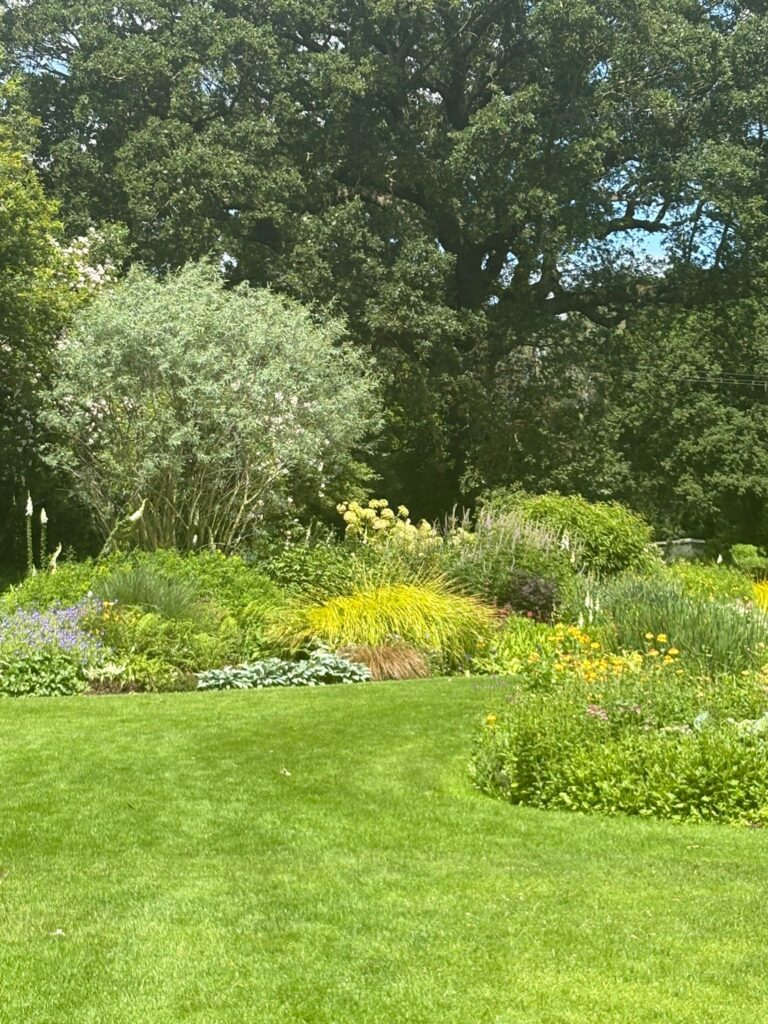
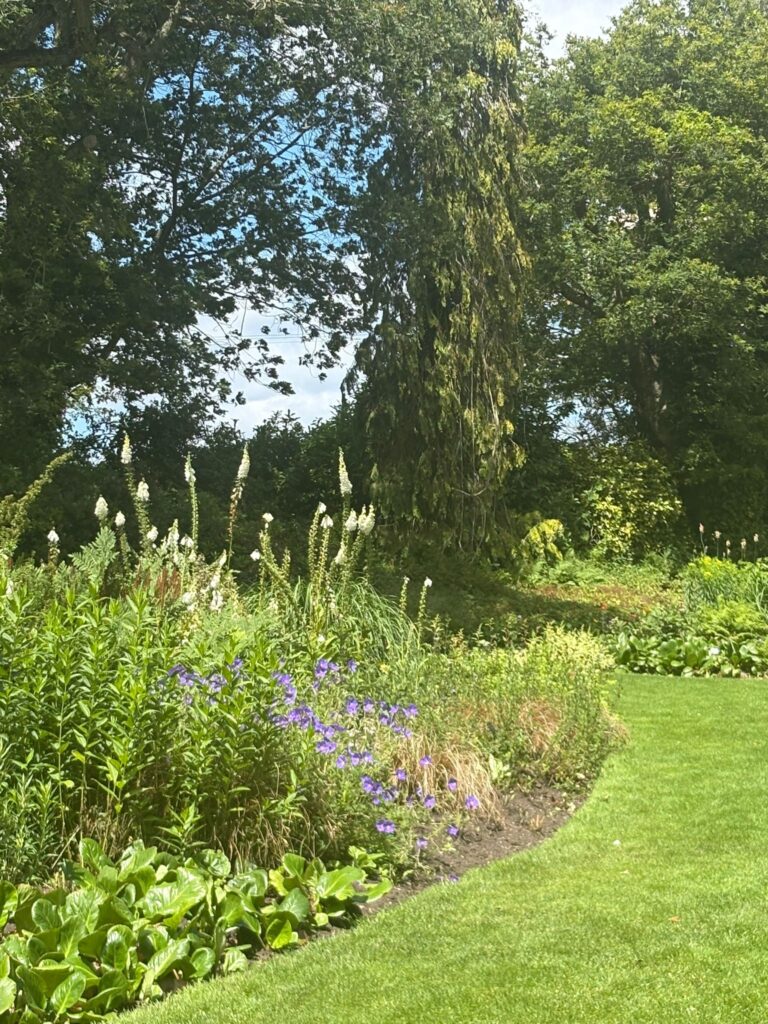
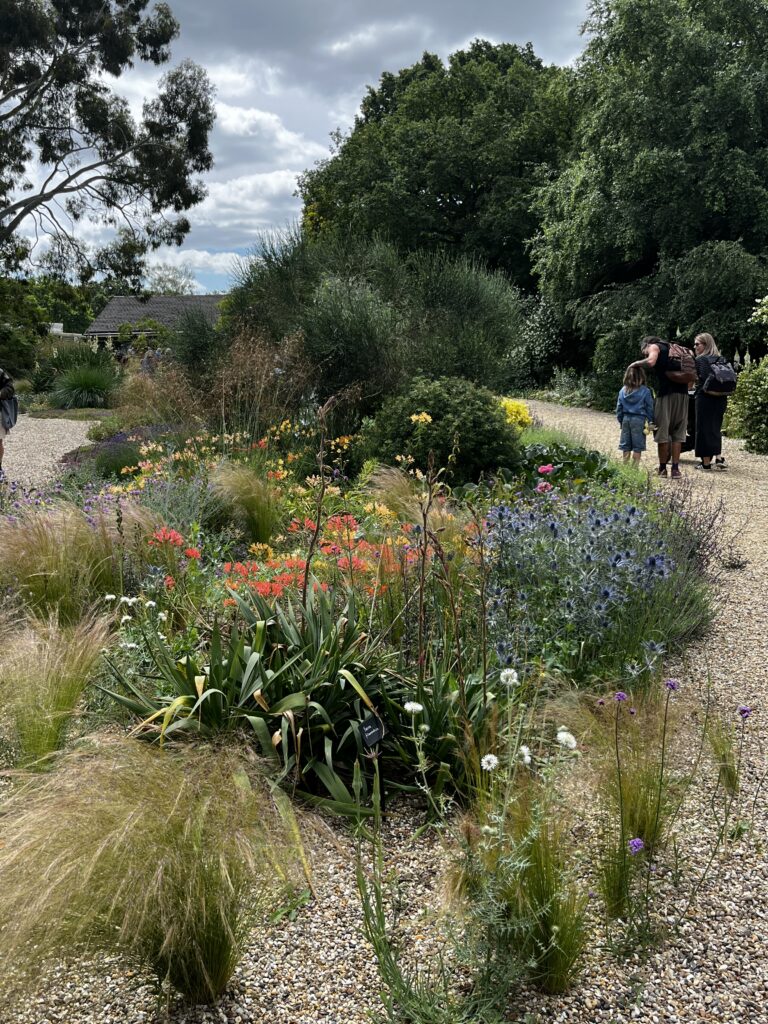
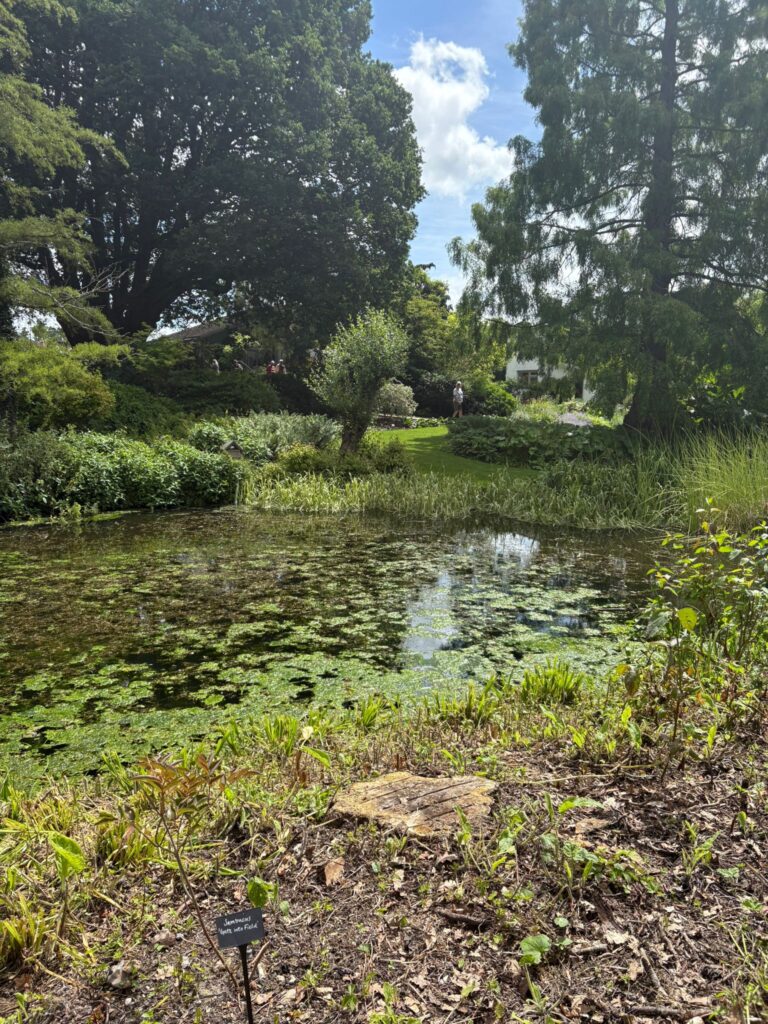
The garden in Stanmore was designed by Tom Stuart Smith and was opened in 2020.  It contains 10,000 plants and 336 trees and shrubs. The garden is large, 2,000 square metres and it consists of pods where patients can go, a glasshouse and beautifully planted borders at waist level so that patients can help maintain the gardens.  The paths are especially made to take wheelchairs and hospital beds.  Patient – led activities take place in the garden.

Lily and Liz set up a stall of crafts, made by patients

One of the 35 volunteers at Horatio’s Garden at Stanmore, Liz, spoke about how she got interested in volunteering at the garden at Stanmore; gardening and helping with activities.  Patients talk about the peace and quiet and sanctuary the garden gives them, as well as providing a lovely space for families to visit. Because the units are sparsely spread around the country, 84 miles is the average distance travelled by visitors to the spinal units. Research into the impact of the gardens has found that for 71% of patients, the garden provides a distraction from pain.

You can become a friend of Horatio’s garden for £10.00 a month – there are 2 Open Days a year.  We are delighted to report that a stall selling goods for Horatio’s Garden at our meeting raised £600.00. 

AHS Visit to RHS Wisley

On Friday 23 January 2026, a coach load of AHS members plus guests, visited

Although it was another grey January day when a coachload of AHS members visited RHS Wisley – at least it didn’t rain! 

Most of us were fortunate to be taken on tours of the extensive flagship RHS garden.  Our tour leader was a very experienced and knowledgeable guide – she took us to the area of the garden known as Oakwood – the original section of the garden – created by George Fergusson Wilson in 1878. He was a keen horticulturalist and established the Oakwood experimental garden with the idea of making difficult plants grow successfully. 

Oakwood was gifted to the RHS by Sir Thomas Banbury who had bought Oakwood from Wilson in 1903. He had been advised to give the garden to the RHS by the Essex gardener, Ellen Wilmott – she of the flower named as Miss Wilmott’s ghost. 

We were able to view many very old trees in this section of the garden as well as a new garden building dedicated to the early RHS founders including Ellen Willmott.  We also admired the winter planting in the Winter Walk, including beautiful red stems of the Cornus and Salix and the beautiful small pines like Pinus Mugo.

  The red bark of the Prunus serrula was shining in the winter light and the white stems of the bramble Rubus cockburnianus made a beautiful picture.  In this woodland garden Snowdrops, Hellebores and Cyclamen coum lined the woodland floor.

The rock garden was looking good and the new borders designed by Piet Odulf were full of grasses and seedbeds.  Exquisite alpine plants on display in the Alpine house were admired by everyone – they are selected daily to show the best examples of Alpine plants. 

Many of us were able to buy the plants seen on our tour in the Nursery and gifts from the well-stocked shop.  

Everyone enjoyed the day and we’re looking forward to more trips in April, May and June 2026.

The Old Laboratory was worth a visit. Apparatus was displayed that had been used to experiment with preservation and advancement of growing.

Growing in a Glasshouse by Shannon Thaden

Shannon Thaden

We welcomed Shannon Thaden, from Organic Lea Community Farm in Chingford, to hear his talk about Glasshouse Growing. It was a wet and windy January evening but our hardy AHS perennials turned up in numbers, a receptive audience, to learn about the challenges and successes of growing in a glasshouse.

Shannon explained that Organic Lea had evolved organically, of course! From allotment space on the edge of the Epping Forest in the River Lea Valley in 2001 and the adjoining Waltham Forest plant nursery which became vacant in 2007, providing an extensive glasshouse area for growing.

The glasshouse covers half an acre and was originally the site of the council nursery, growing all their street trees and public spaces plants. The economics of this changed and the Council gave up the Hawkwood nursery site. The land had a covenant allowing it only to be used for horticulture so a serendipitous opportunity arose and Organic Lea expanded its operation.

Under the concrete is the soil and so this proved. The glasshouse concrete floor was excavated and 25 growing beds were created by adding compost and developing the soil structure.The soil is London clay, which has the advantage of retaining nutrients and water. High value crops are grown on a 5 year rotation with the soil nourished by compost so no added nutrients are needed. In summer it is:  tomatoes, cucumber, aubergines, green beans and peppers, with green manure in the growing gaps. In the winter it is spring garlic from small cloves, full size garlic, broad beans, and winter salads such as endive, lambs lettuce and rocket. Some watercress is grown in damp soil, and hops and lemon verbena are small sidelines.

The glasshouse allows for extensive seed sowing, with the trays laid out on a sandy bench, heated by snake like piping in parts, to help with germination. Crops like chilli need a good head start in the cool, varying light conditions in the UK and this warming helps.

One of Organic Lea’s USPs is collecting their own seeds, and nearly all their plants are grown from saved seeds. Organic Lea have 2 big plant sales, in April and May, so well worth a trip up to Chingford to buy local good quality organic plants. They also produce compost and green manure.

As organic growers they are not allowed to heat the greenhouse because of the carbon footprint. Temperature control is through tweaking the venting  which is mechanically operated. The roomy height of the glass house allows climbers like cherry tomatoes to grow to impressive heights and lengths, up to 7 metres on a diagonal, allowing a bigger crop. Overhead wires run the length of the greenhouse and jute string hangs down from the wire, single strands paired up with a plant, and the string end settling into the hole made for the new plant.The plant can be easily trained around the string without having to use individual ties. Irrigation is with seep tubing, and a sprinkler system is used to keep cucumbers and aubergines foliage moist as they like these conditions. 

Pollination is promoted by planting marigolds and other flowers that attract insects, wind pollination occurs naturally and some of the plants self pollinate. Pests are kept down with biological controls and by encouraging predator insects.

White fly is predated by a parasitic wasp that lays its eggs in the white fly larva and then eats its way out. Bit of an alien theme !

Ladybirds eat white and black flies and when there is an outbreak then the ladybirds respond in numbers. Nettles are grown at the glasshouse entrances providing a happy home for the ladybirds.

Blue spider mite is a fairly unusual indigineous pest that appeared about 5 years ago and sucks sap from the plant and it has been a particular problem on winter salad crops especially endive. Shannon thought it had peaked now and that natural predators may be finding it and reducing numbers.

The seed trays are covered with a layer of recycled cork waste to retain moisture and provide a deterrent to egg laying pests. Previously vermiculite was used but Organic Lea are trying this more sustainable material. Something to consider for your houseplants.

Expanding undercover growing has been a 2025 project and Shannon has assembled a mobile polytunnel structure to use on outdoor beds. Organic Lea are experimenting with crops to grow in the polytunnel. 

Organic Lea have a local reach. Their veg box scheme is delivered to St Gabriels Church Hall for collection. They are a food distribution hub for organic products to serve their veg boxes and they source from farms in Suffolk, Norfolk and Kent to supplement what they grow.

Do check them out: www.organiclea.org.uk

As well as their plant sales they run courses and have an active, well organised volunteer programme and the site is quite special to visit. Shannon also mentioned a side hustle he runs in Leytonstone when we were talking about growing spaces, which is Church Lane Community Garden, Harold Road, E11 4QY, usually opens Mondays and Saturdays. Again worth a visit and on our doorstep.