
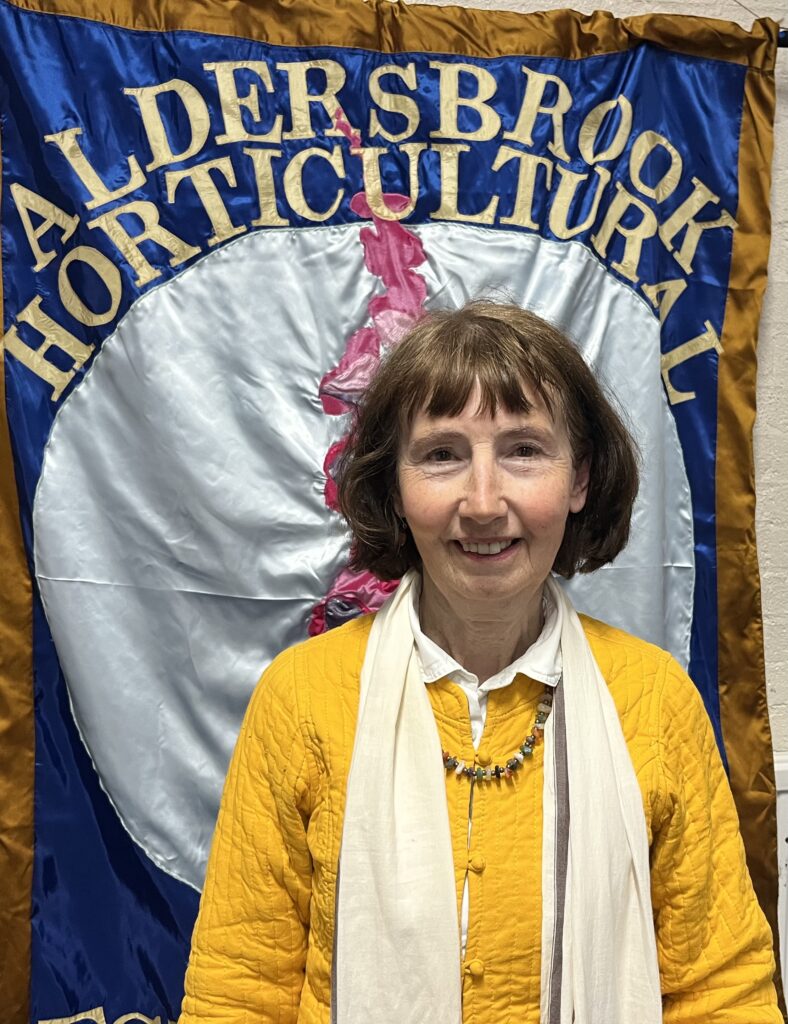
Emma Clarke, a renowned garden designer of Islamic Gardens, gave a fascinating talk to Aldersbrook Horticultural Society at Tuesday’s May meeting. Emma has designed a number of Islamic gardens, including the garden at the Mosque in Cambridge and assisted in the design of the Carpet Garden at Highgrove.
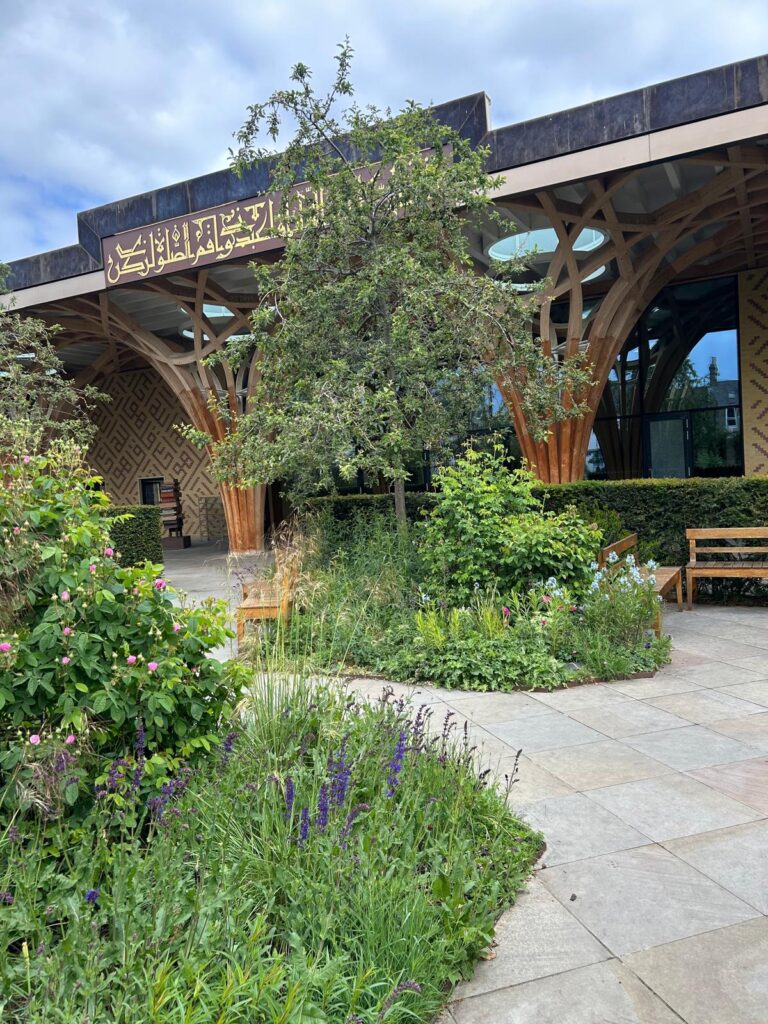
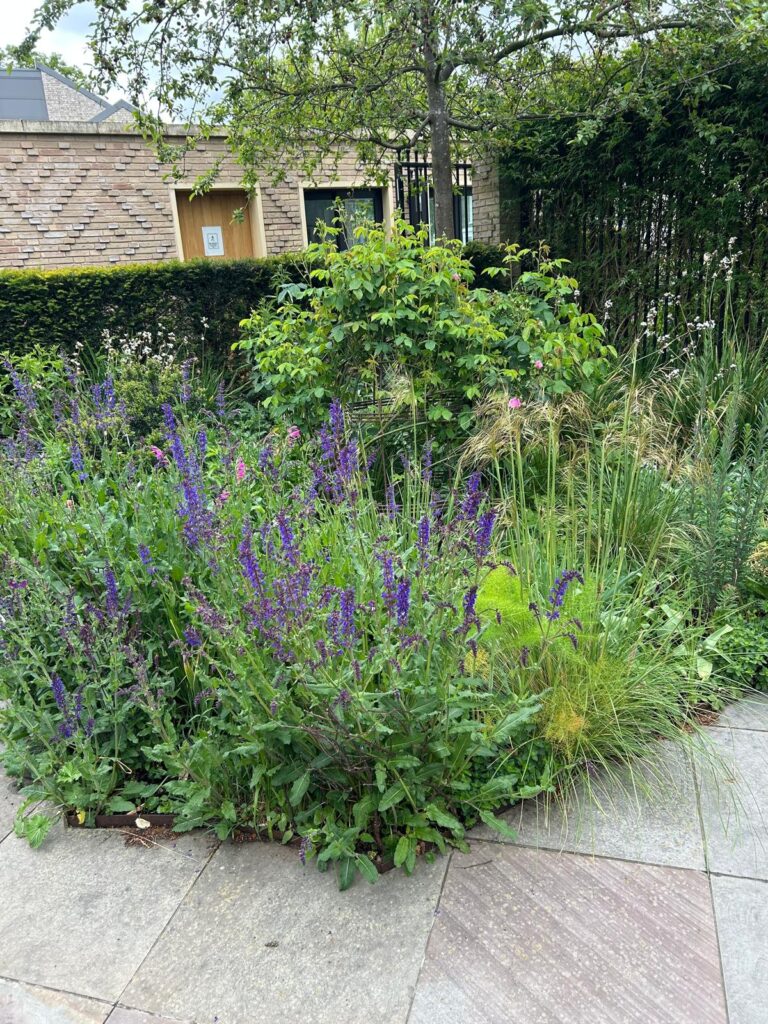
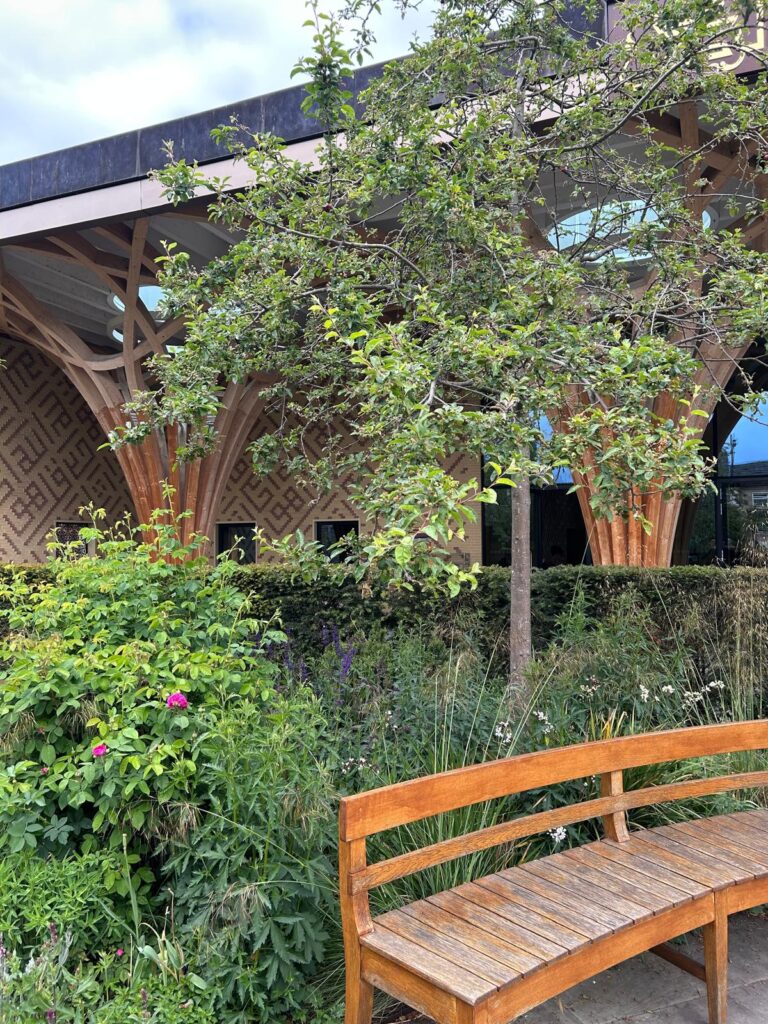
The beautiful slides that illustrated her talk explained how Islamic gardens are designed and the spiritual principles that underlie them. In the Koran, there are many descriptions of the gardens of paradise. Islamic gardens are designed using several elements: water, shade, symmetry, enclosure; the relationship between the garden and its architecture; balance and harmony of the overall design; aromatic planting; and the importance and significance of trees.
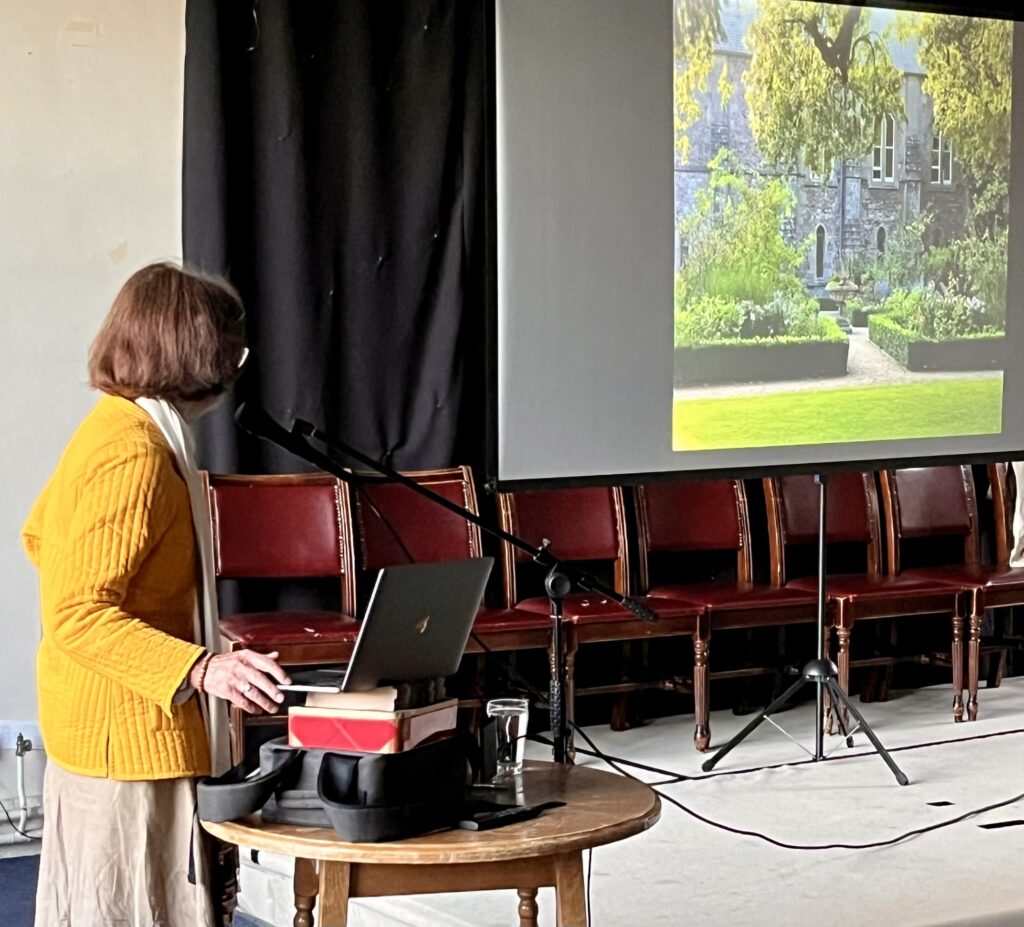
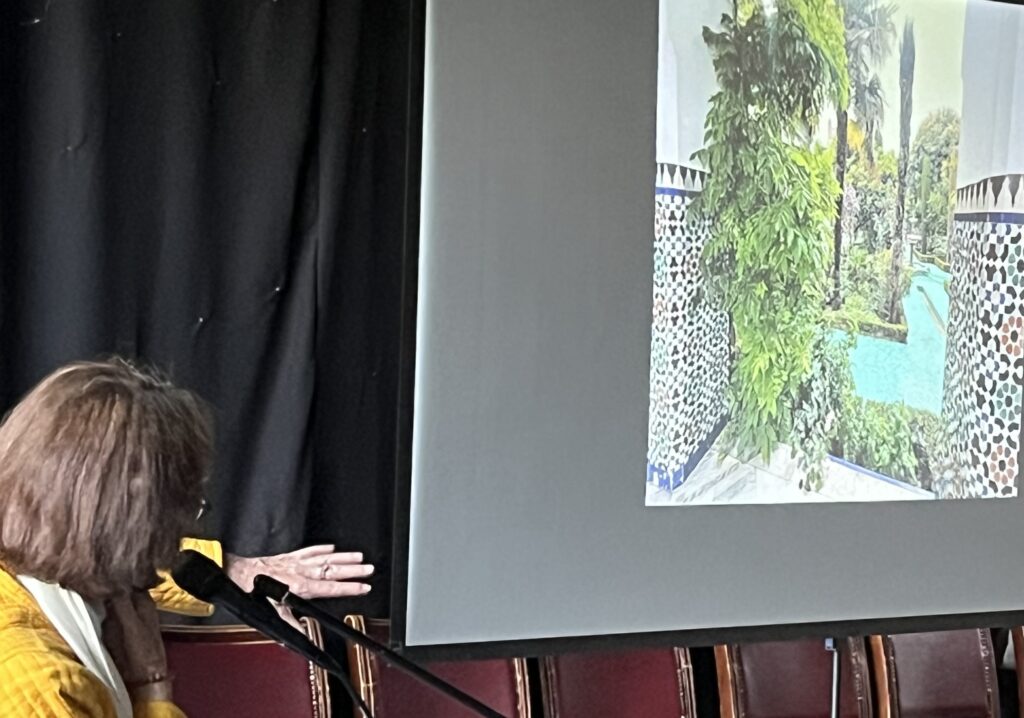
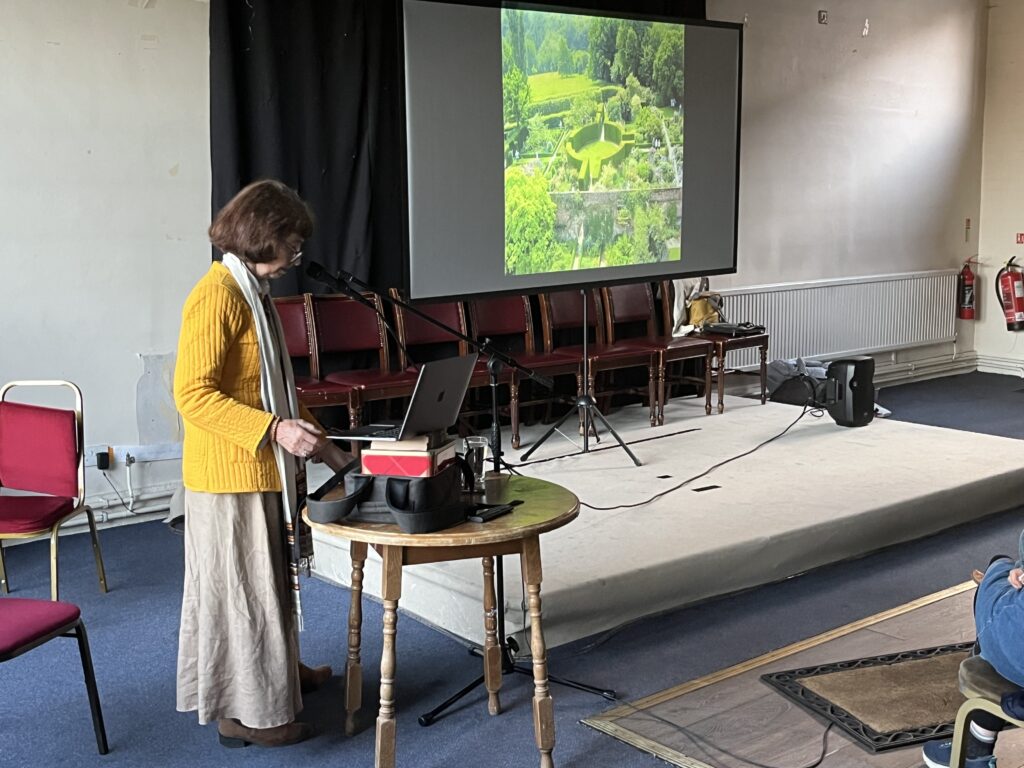
A photo of the City of Cairo emphasised the lack of green and underlined the need for green spaces in cities. This was followed by beautiful slides of the architecture and planting of the Alhambra to show how important green spaces are. Green shade represents the symbolic protective nature of God and green provides rest and calm. Islamic gardens are divided into four symmetrical areas providing a sense of order, divided by water or pathways representing the four rivers of paradise. Slides of European monastic gardens laid out in squares showed a similarity with Islamic gardens – the squares giving rest and calm. As Emma said, religion should bind us together.
In Mediterranean, Asian and Middle Eastern countries, the importance of water is paramount, providing an oasis in the desert and irrigation to keep the planting green and lush. Water reminds us of our temporary being and the purifying quality of water can nurture us from within. A fountain can also be seen as representing a fire – the heart of the home. The symmetrical nature of Islamic gardens with four squares around a circle symbolises the earth (the squares) around the circle (heaven). As well as Islamic gardens following this pattern, some well-known English gardens such as Sissinghurst have similar patterns. Enclosure is represented by walls to give privacy and sanctuary – Emma talked about secret gardens like the walled garden at Rousham.
A slide of the Taj Mahal beautifully illustrated the relationship between the architecture of the building and the four-fold garden with water at the front. Other slides showed perfect examples of the balance and harmony of the overall design, with water as the supreme unifying factor, such as the Sultana garden. Emma gave examples of the sort of planting that is used in Islamic gardens – roses are particularly loved in Islam and white roses represent peace – peace from the world or peace from our internal thoughts. Trees are also very important– they remind us to look above and beyond – the upright verticality of the Cypress is a good example. Jacaranda and Date Palm, as well as fruit trees with blossom are often used.
Emma completed her fascinating talk by showing some slides of the Aga Khan Centre, which AHS members will be visiting on Tuesday 2 June – meeting outside at 6:15pm. Please email AHS by 17 May to let us know you’d like to come.