A very big Thank You to all who donated or bought plants at our recent Plant Sale.
You made a fantastic.
£919.25
for Cancer Research

A very big Thank You to all who donated or bought plants at our recent Plant Sale.
You made a fantastic.
£919.25
for Cancer Research
With the weather getting warmer and risk of frost having passed, there is a lot that can be planted in both the flower and vegetable garden in May.
Weather watch:
Although the risk of frost is diminishing, it is still a possibility as warm, cloudless days can be followed by cold nights. Keep an eye on the forecast and don’t be tempted to plant out tender plants until the end of the month.
Toughen up tender plants
Seedlings nurtured indoors cannot be planted outside straight away. Instead toughen them up by placing them outside in a sheltered spot for a few hours during the day then bring them inside. Gradually increase the amount of time they spend outdoors . Do this for a period of one or two weeks before planting directly into the ground.
Divide Primroses
These spring plants can become congested over time . To reinvigorate them and keep them producing blooms in future years, divide after they finished flowering:
Prune spring-flowering shrubs
Flowering shrubs such as forsythia, ornamental currants, viburnums, chaenomeles (flowering quince) need to be pruned straight after flowering so there is plenty of time for new growth to develop and produce flowers next spring.
Plant out summer bedding and sweet peas
Towards the end of the month, plant out begonias, tender salvias, pelargoniums, lobelias, sweet peas… Acclimatise plants to outdoor conditions by putting them outside during the day and bringing them in at night for a week or two. Put the necessary support in place for climbing and trailing.
Plant up baskets and window boxes with tender plug plants
For long lasting summer colours it’s the right time to plant up hanging baskets and pots. If it becomes too cold for these plants to stay outside, keep your baskets and containers in a porch or greenhouse for a couple of weeks.
Sow beans runner beans and French beans
Earth up potatoes
Once the stems are 20cm tall, draw soil up to form a ridge along the row.
This protect shoots from frosty and excludes light, which turns potatoes green and inedible.
Grow salads
Ensure a continuous supply of fresh leaves by sowing a small amount of seed every two to three weeks.
Plan for a winter harvest
Sow slower-growing vegetables such as cabbages, broccoli and kale for harvesting in winter. Sow seeds in module tray or seedbed for transplanting to final position later.
Don’t forget
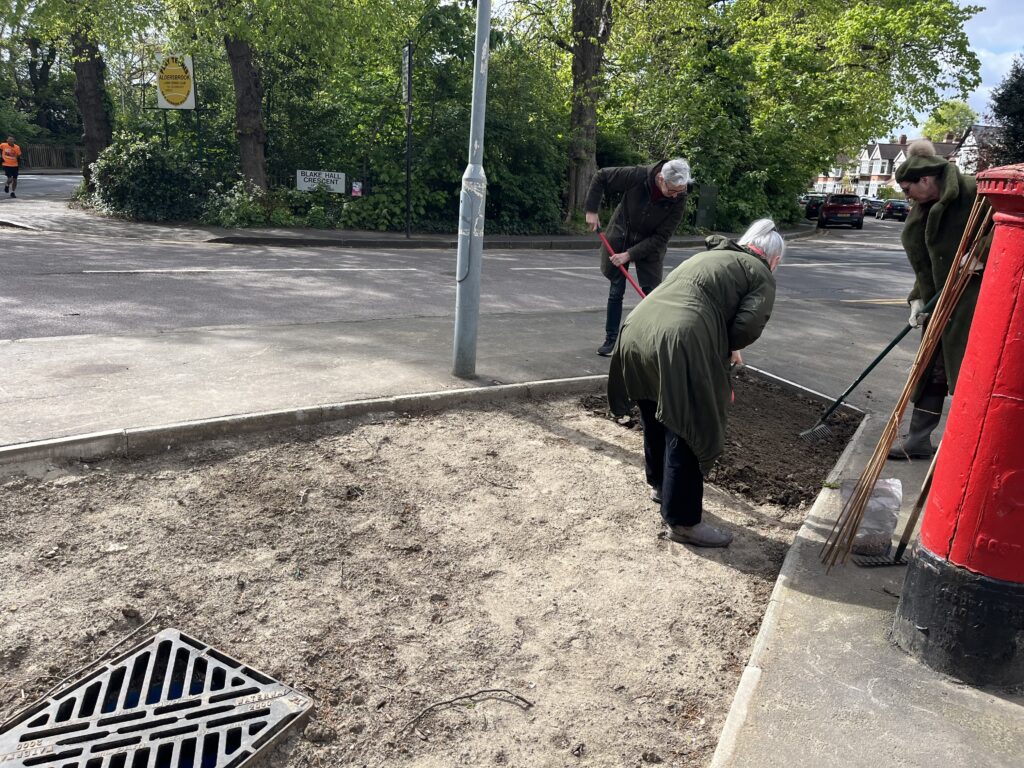
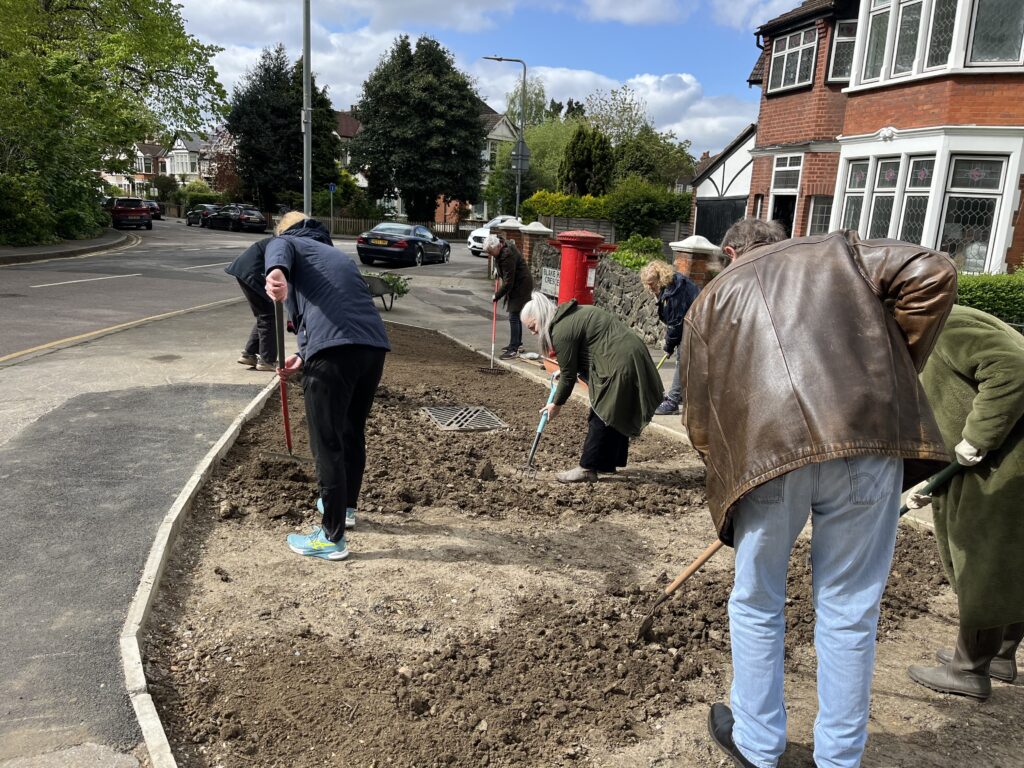
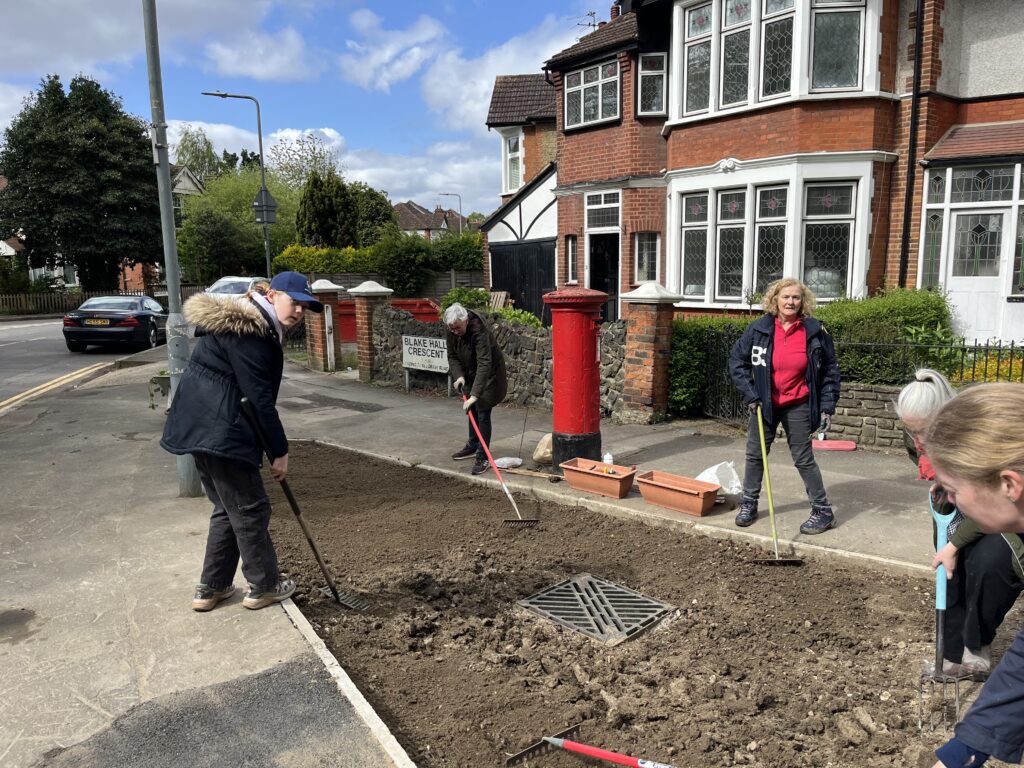
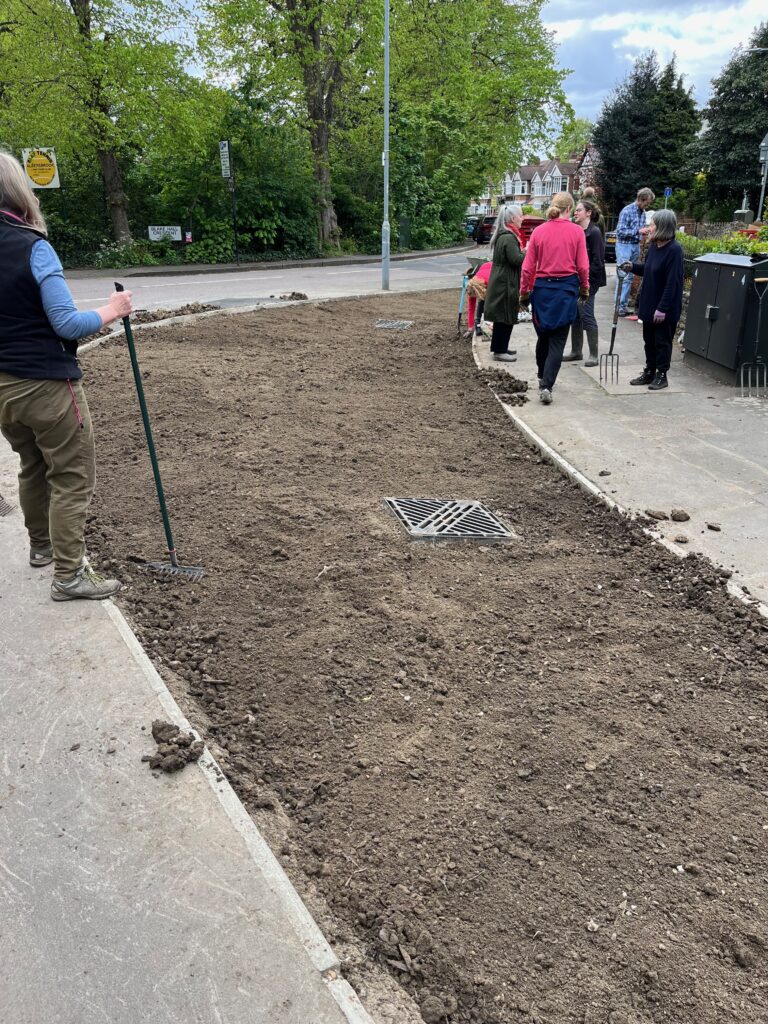
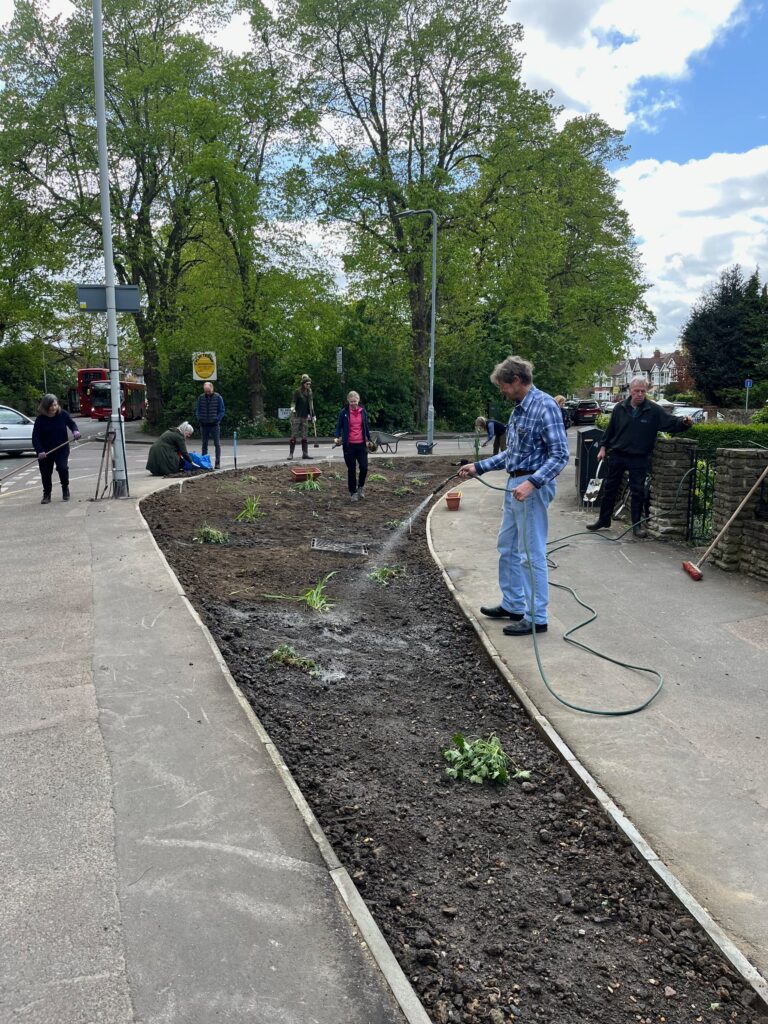
Many months ago, the AHS were approached by Councillor Blackman to garden at the junction of Blake Hall Road/ Blake Hall Crescent / Belgrave Road, on the Lakehouse Estate.
The area, adjacent to the bus stop was regularly being dug up by Thames Water to create a drainage system. The houses next to the site were constantly being flooded.
I went about rounding up a group of volunteers from the Lakehouse Estate to garden the plot. I received a response from 18 people who were interesting in helping.
After much negotiation and paperwork the plot was handed over to us by Simon Stodel, Neighbourhood Engagement and Education Officer of the London Borough of Redbridge.
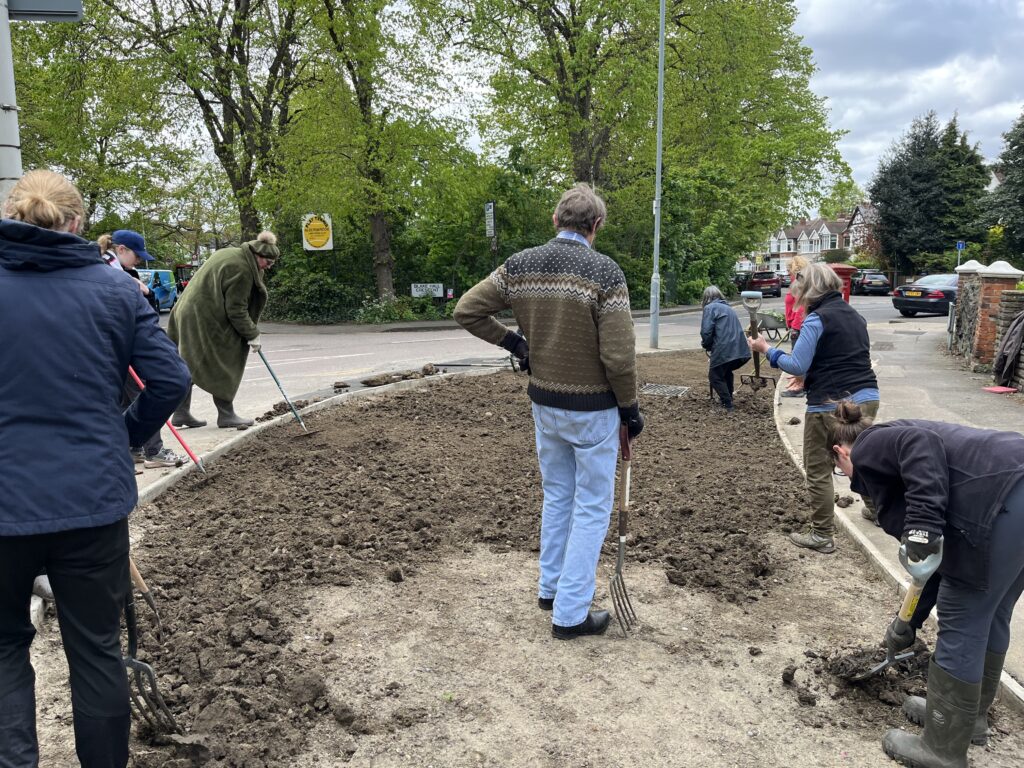
On Saturday 20 April, thirteen volunteers met at the site. We prepared the plot, sowed the seeds, provided by the LBR and planted a variety of plants brought along by the volunteers.
All in all, a successful morning’s work.
Rosemarie Coffey, Lakehouse Estate and AHS Gardeners.