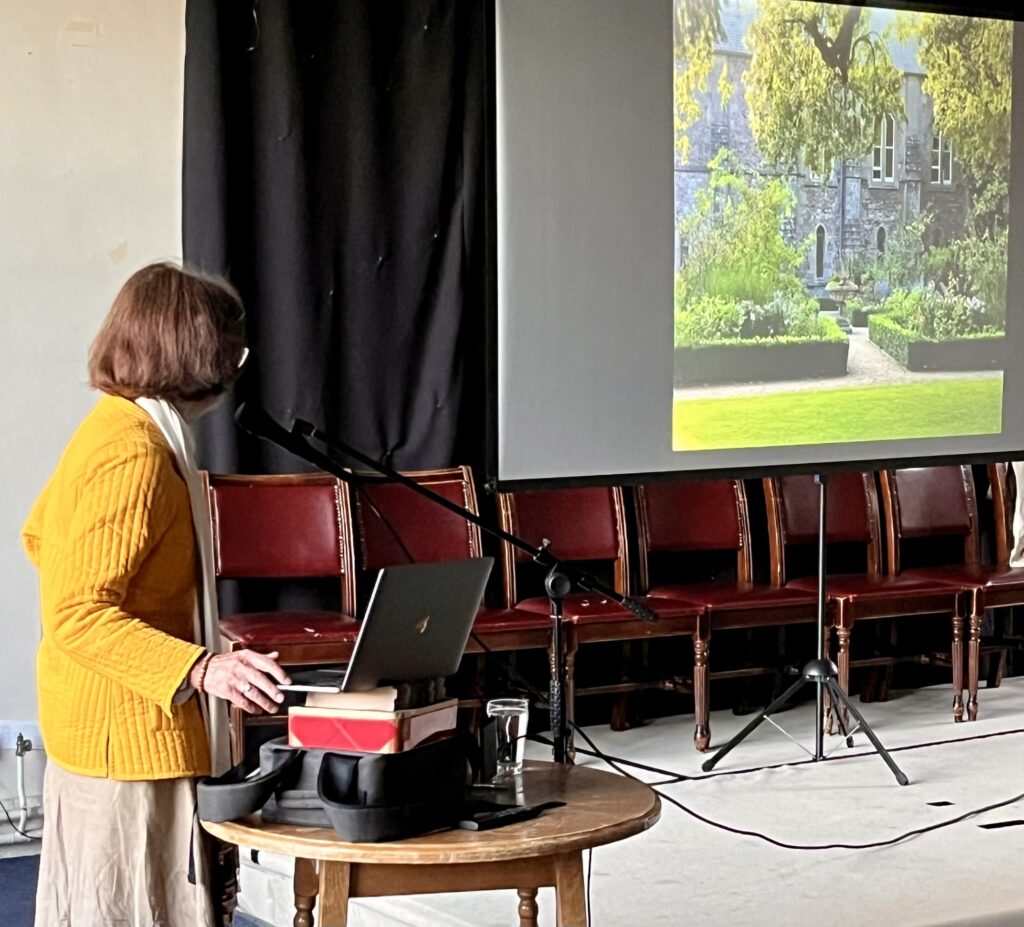
On Tuesday, 2nd June, it was a real treat for 32 members of The Aldersbrook Horticultural Society to visit The Aga Khan Centre. The rain cleared and problems with the tube train strike were largely avoided as we arrived at the Centre: a haven of peace and tranquility close to the Coal Drops Yard area of Kings Cross.
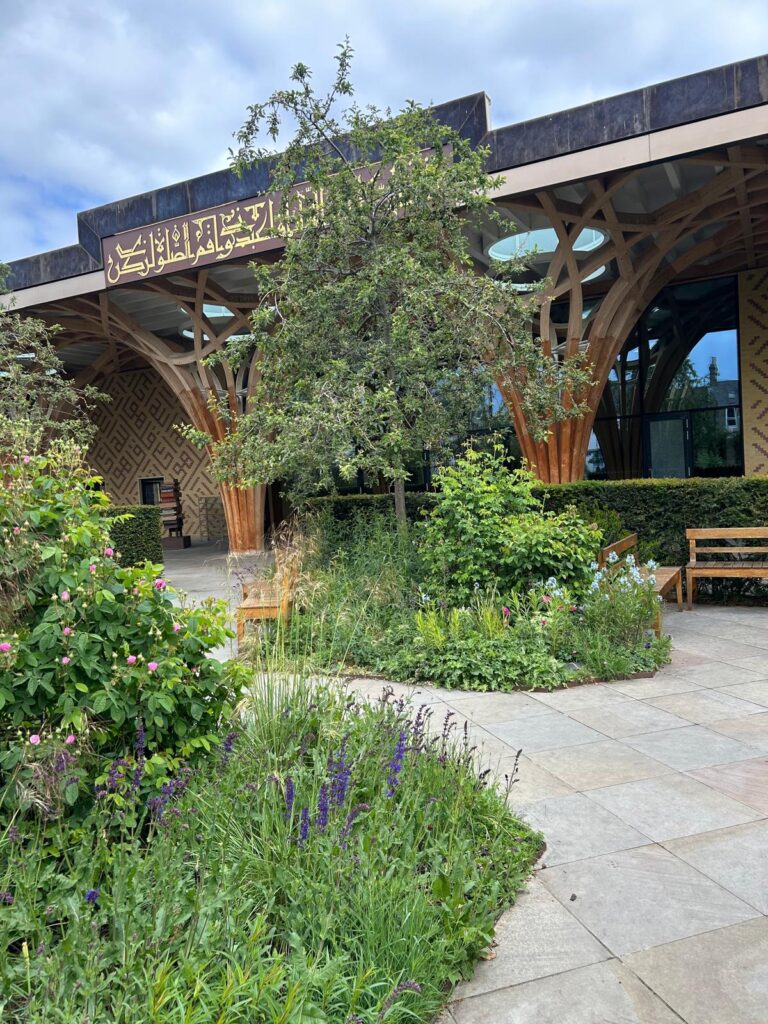
The building is one of the more distinctive contemporary buildings in King’s Cross because it blends modern Japanese minimalism with references to Islamic architectural traditions. Our guides provided much information for us about the nature of the building, its gardens and its purpose.
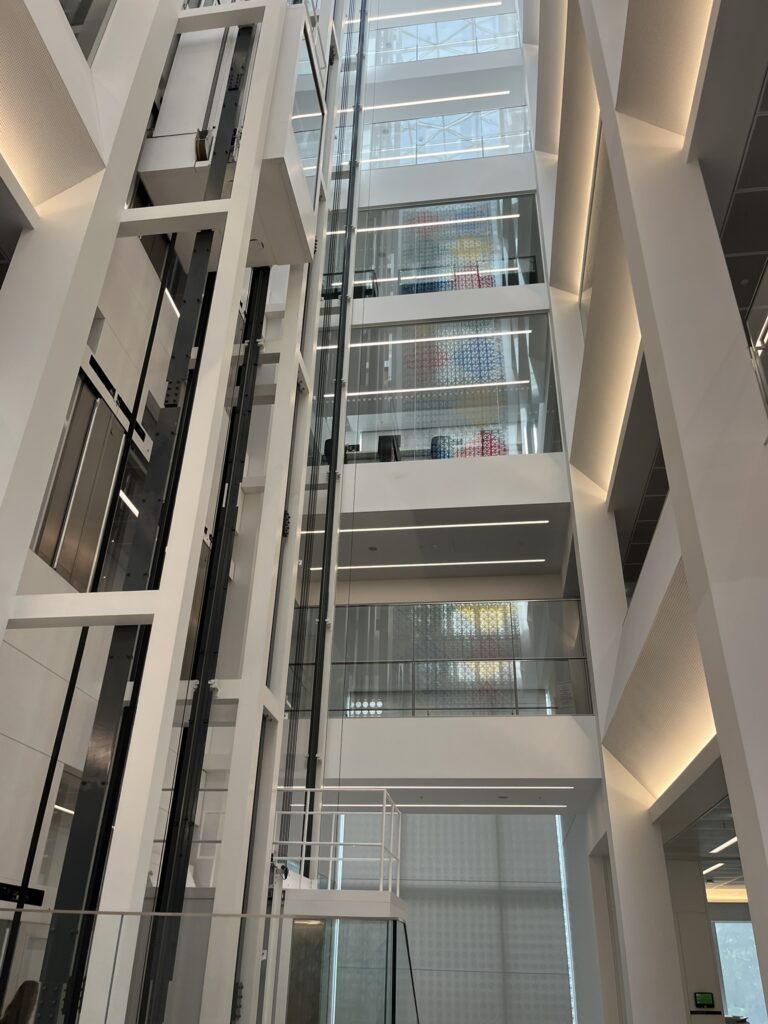
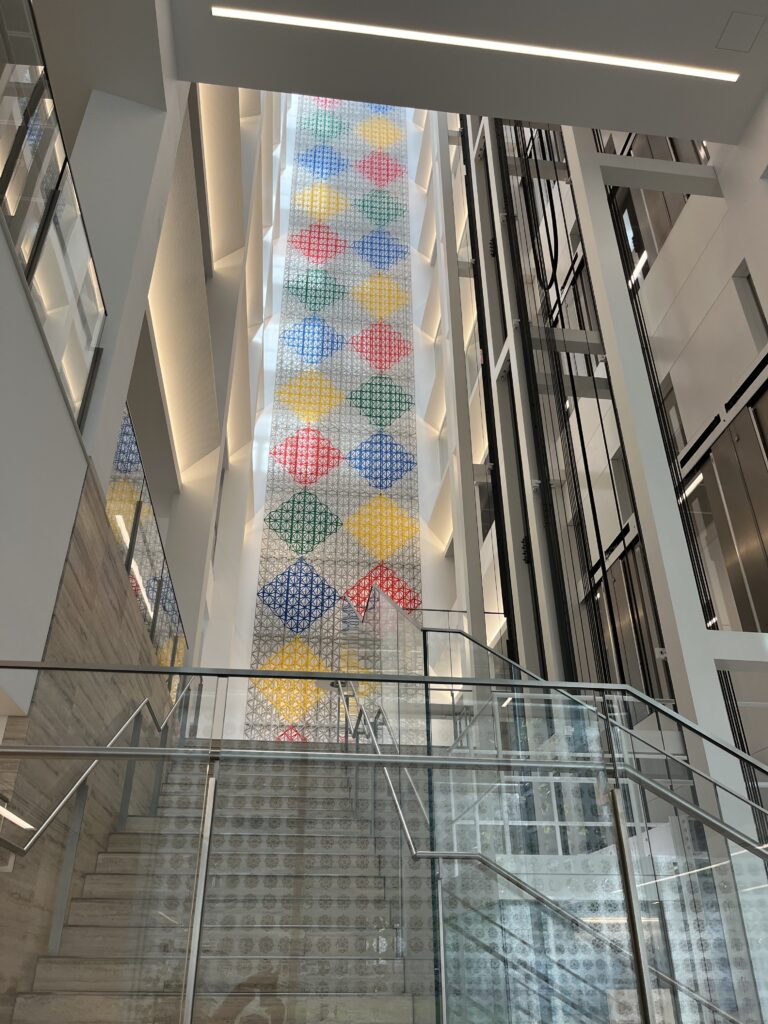
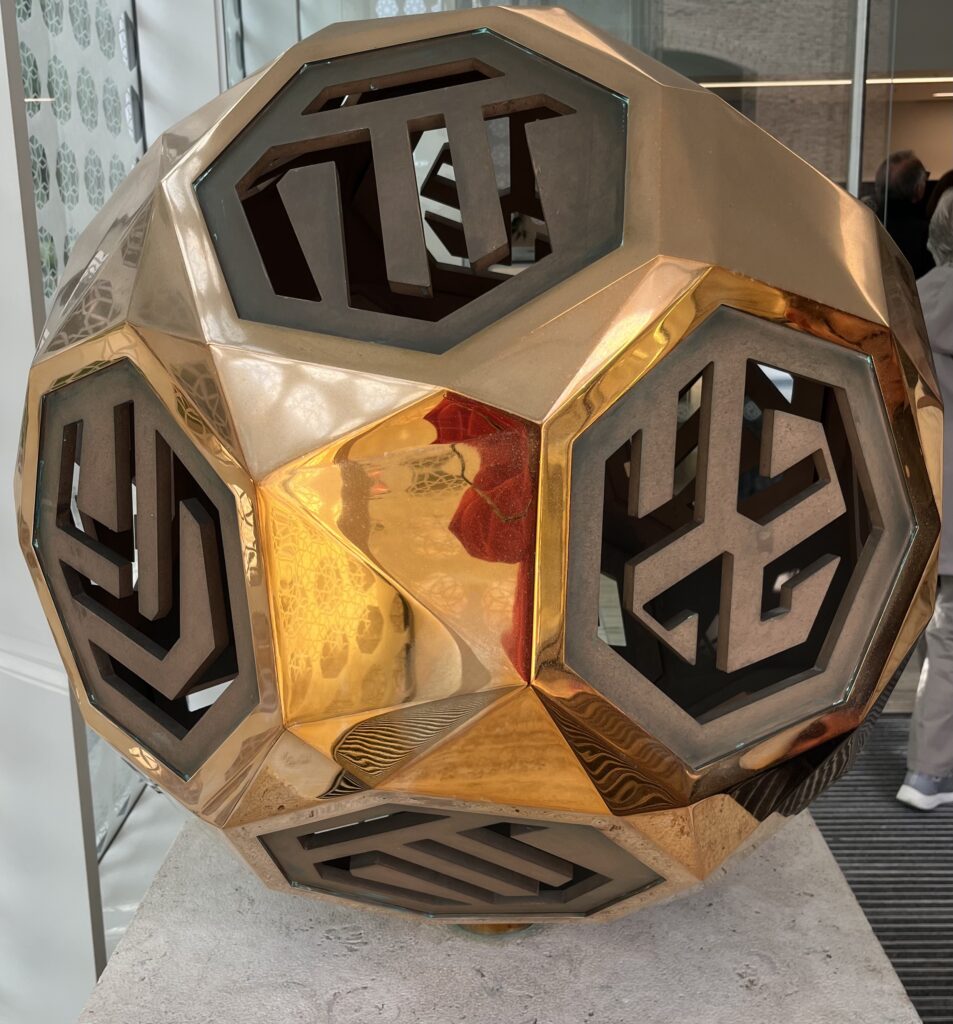
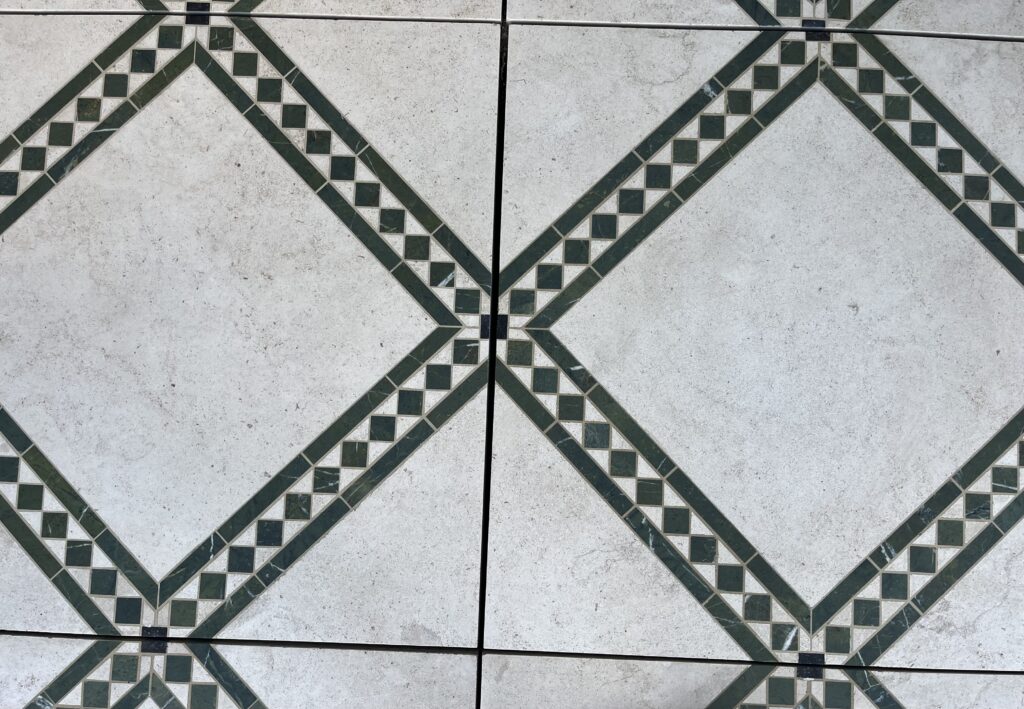
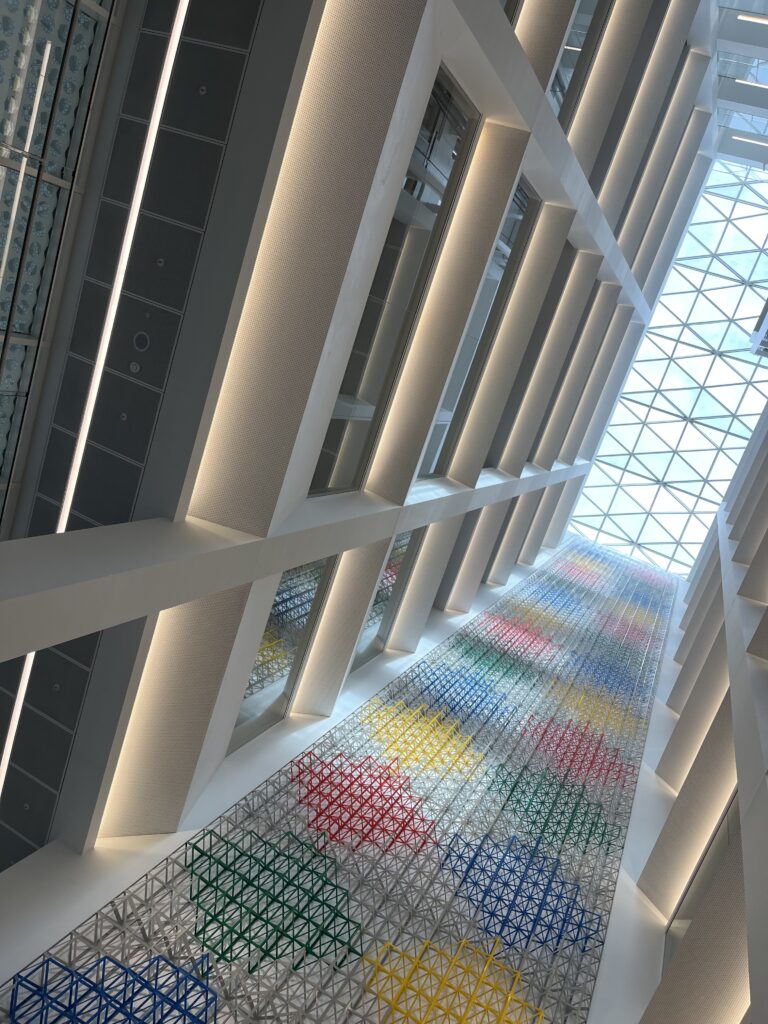
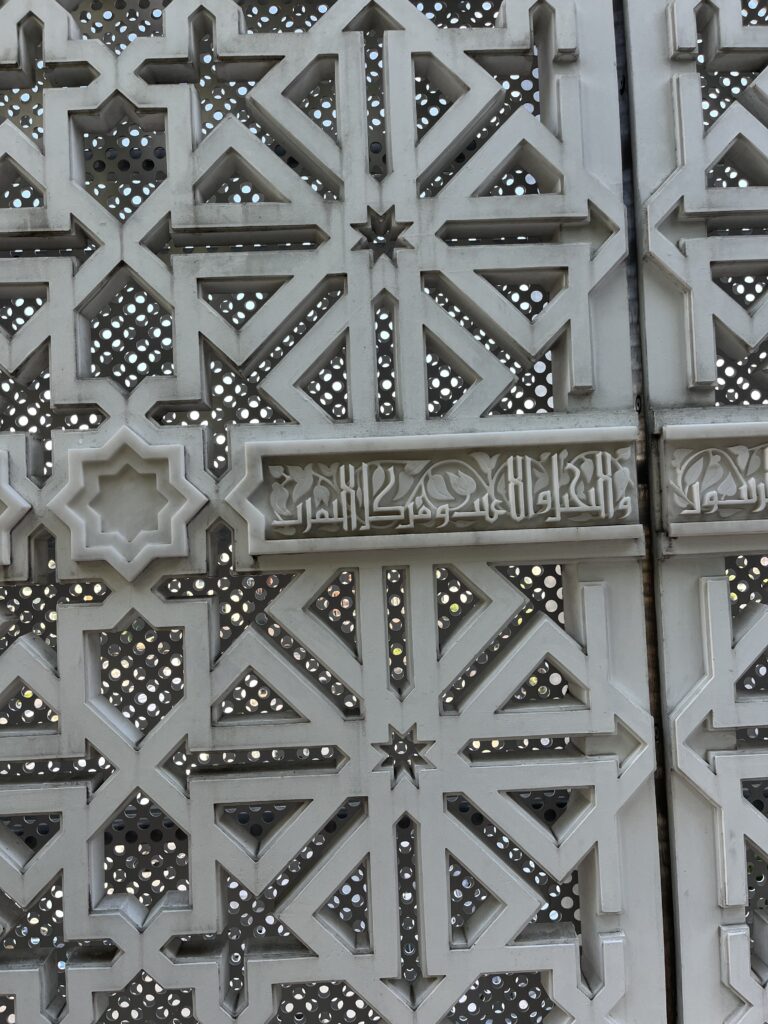
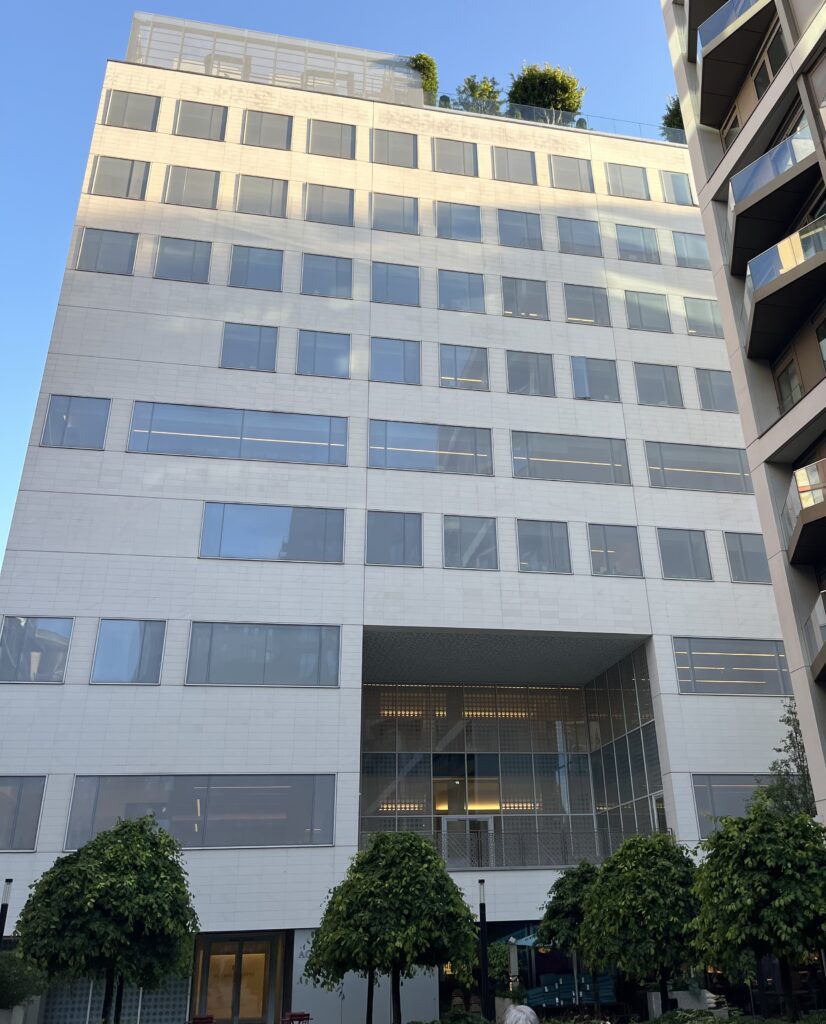
Designed by the celebrated Japanese architect Fumihiko Maki, the building was conceived as a place for education, research, and cultural exchange focused on Muslim civilisations. The building is clad in pale limestone, echoing London’s traditional Portland stone architecture while standing out against the darker brick warehouses and industrial heritage of King’s Cross. The architectural heart of the building is a nine-storey glazed atrium. This space is inspired by the courtyards found in traditional Islamic architecture. The atrium brings daylight deep into the building and creates visual connections between floors.
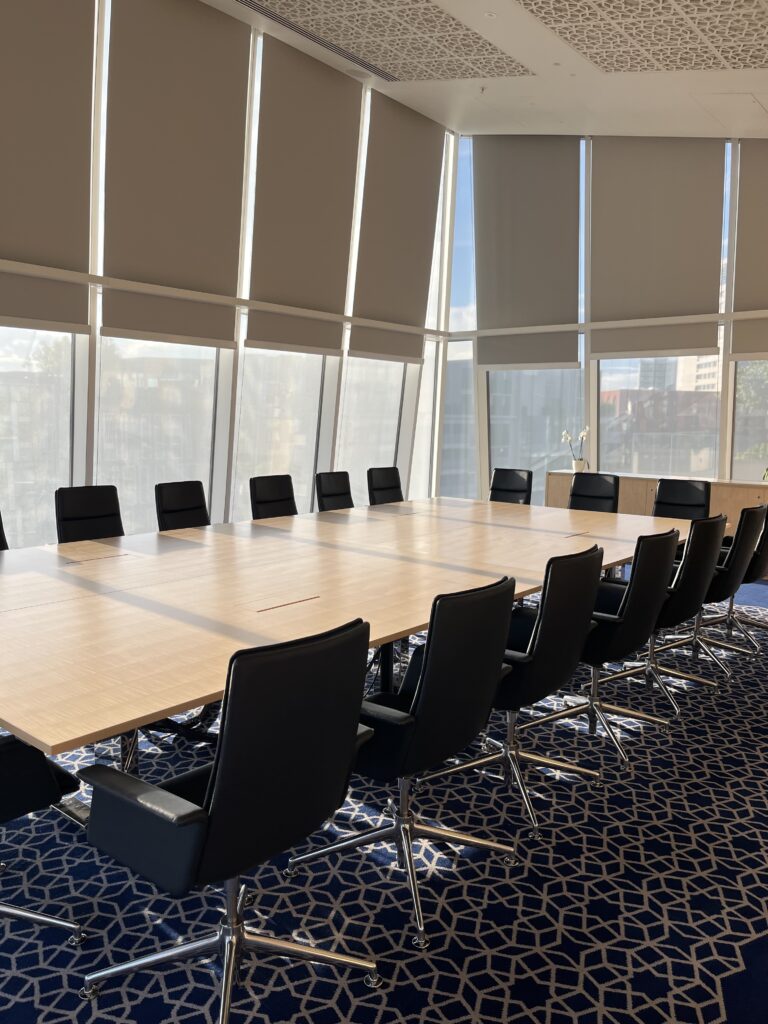
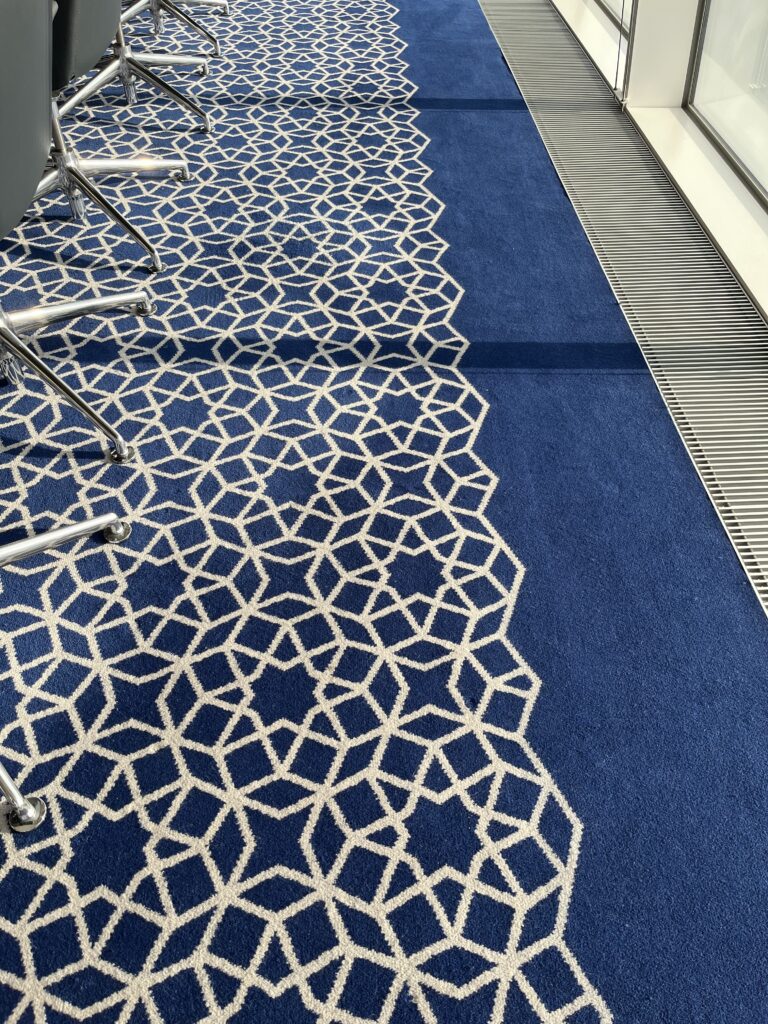
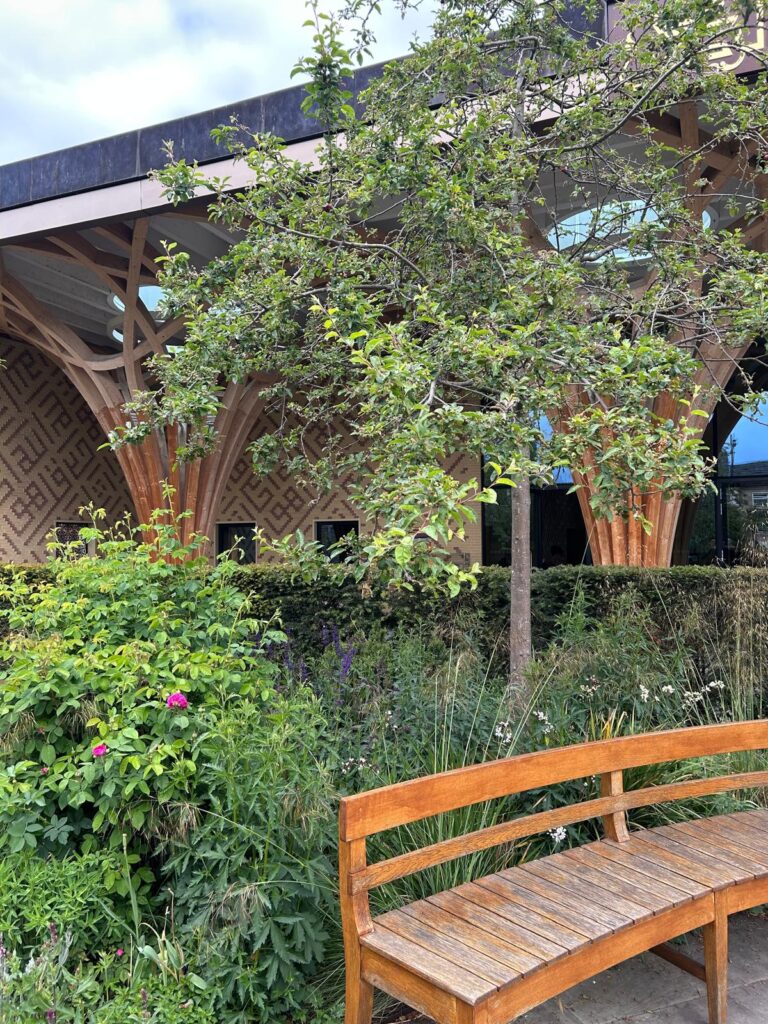
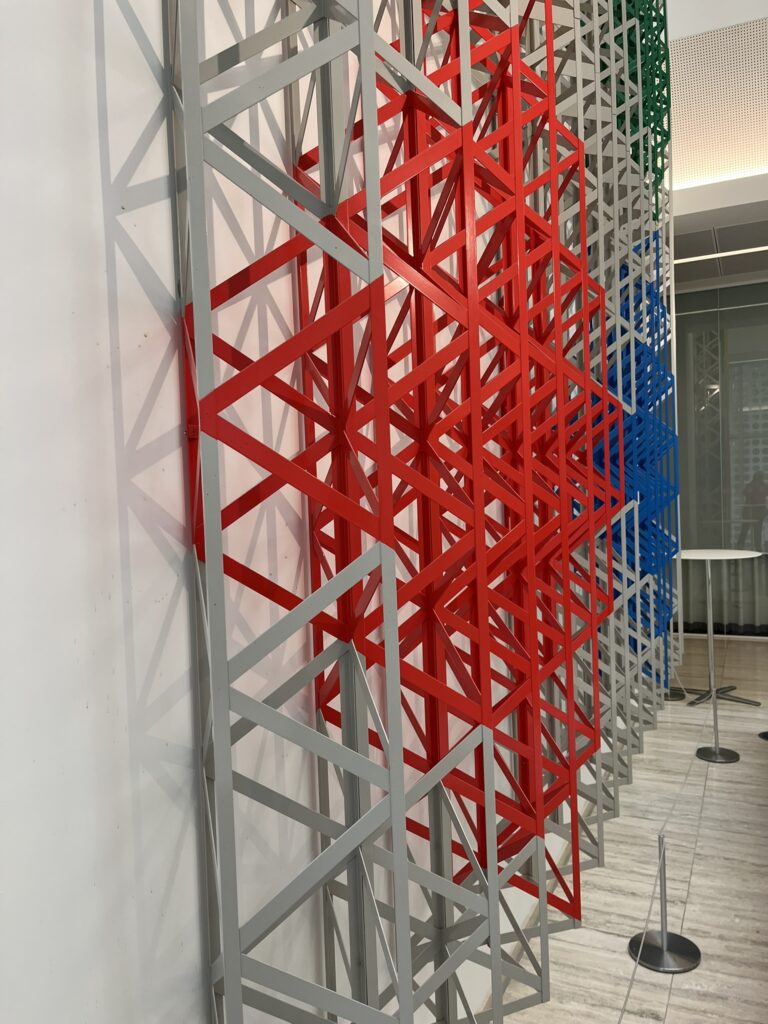
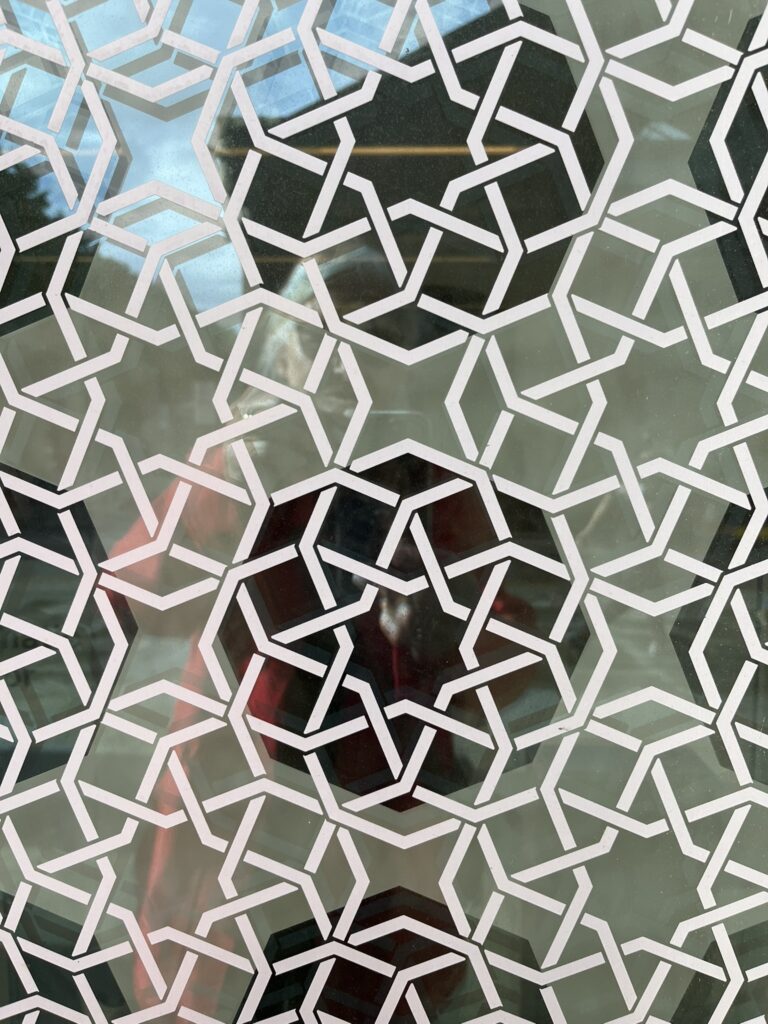
A recurring eight-pointed star motif appears throughout the building in screens, metalwork, glazing patterns, and garden details. This geometric pattern is common in Islamic art and architecture. As sunlight moves across the building, these patterns cast intricate shadows into the interior, making light itself part of the architectural experience.
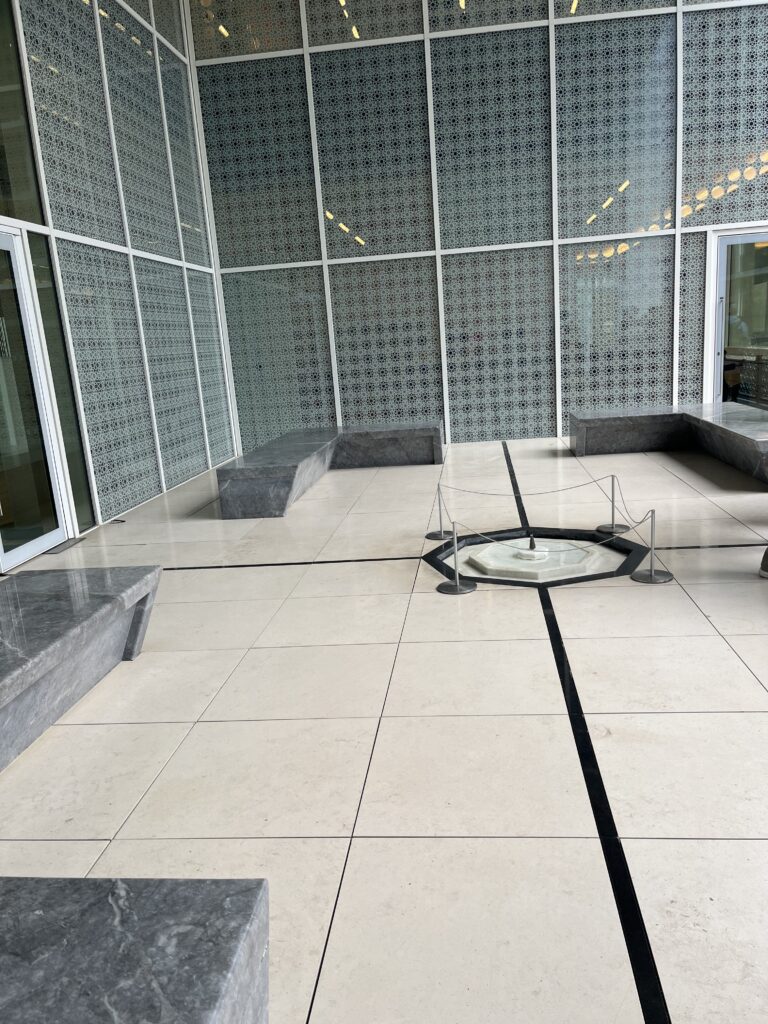

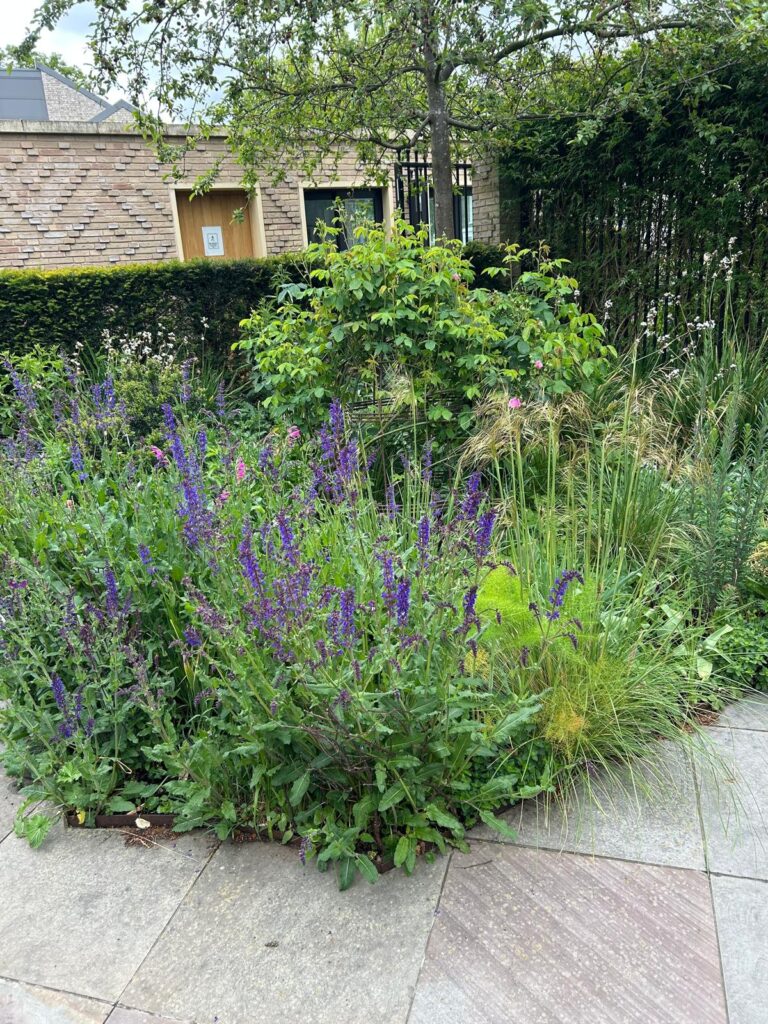
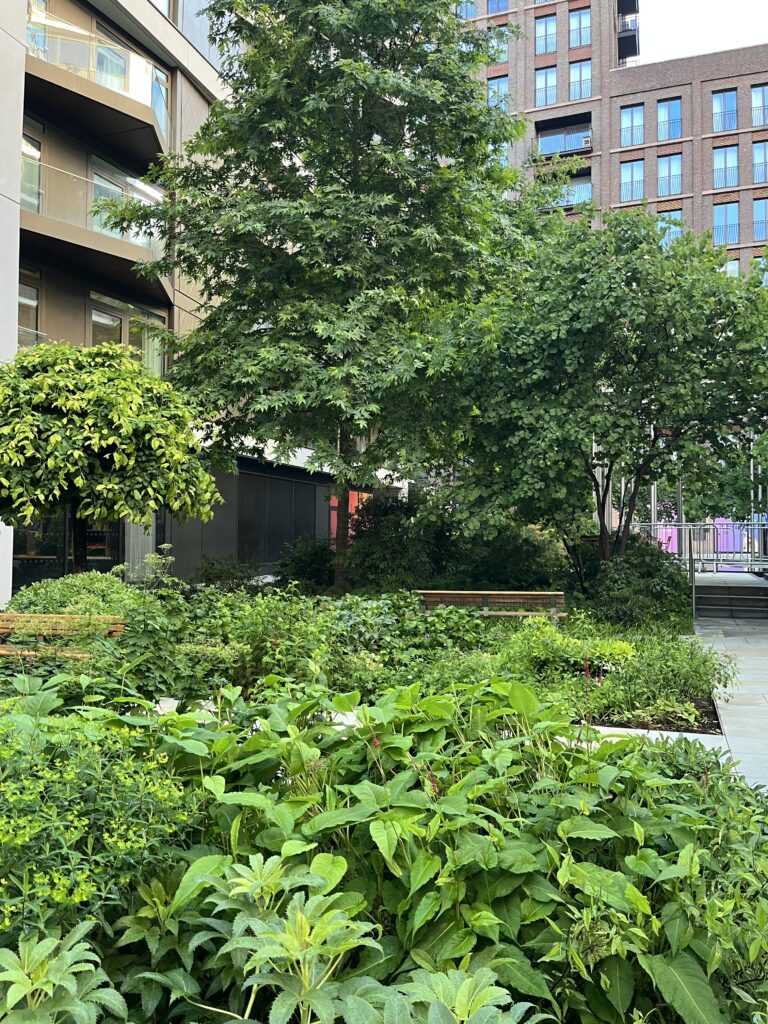
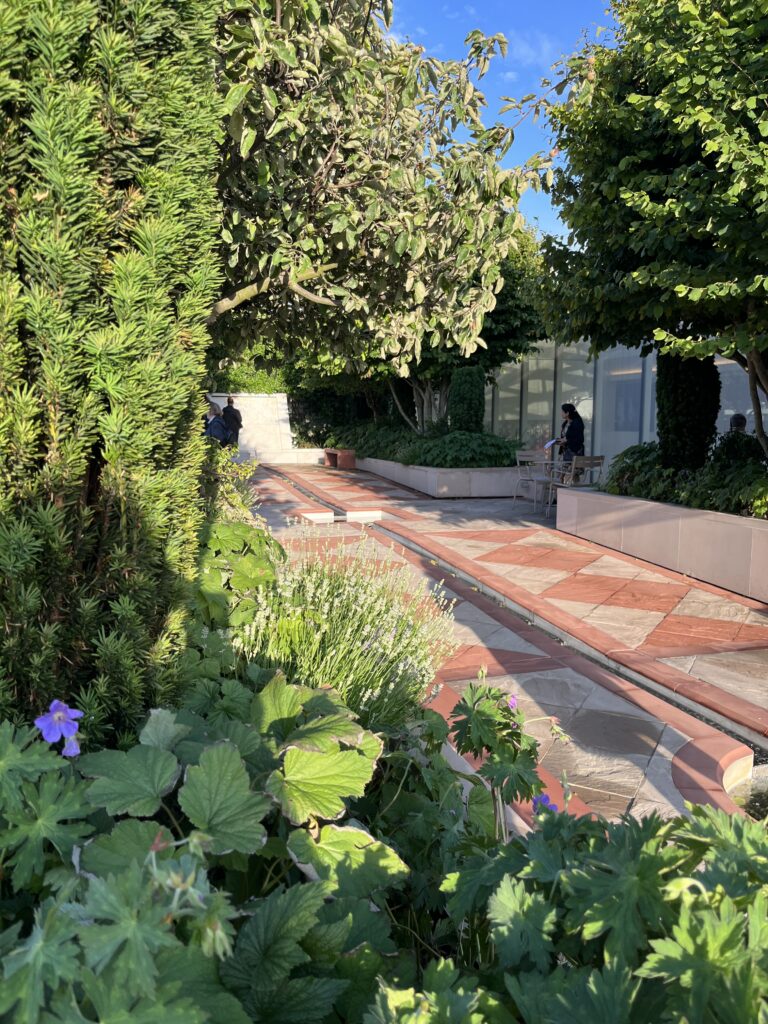
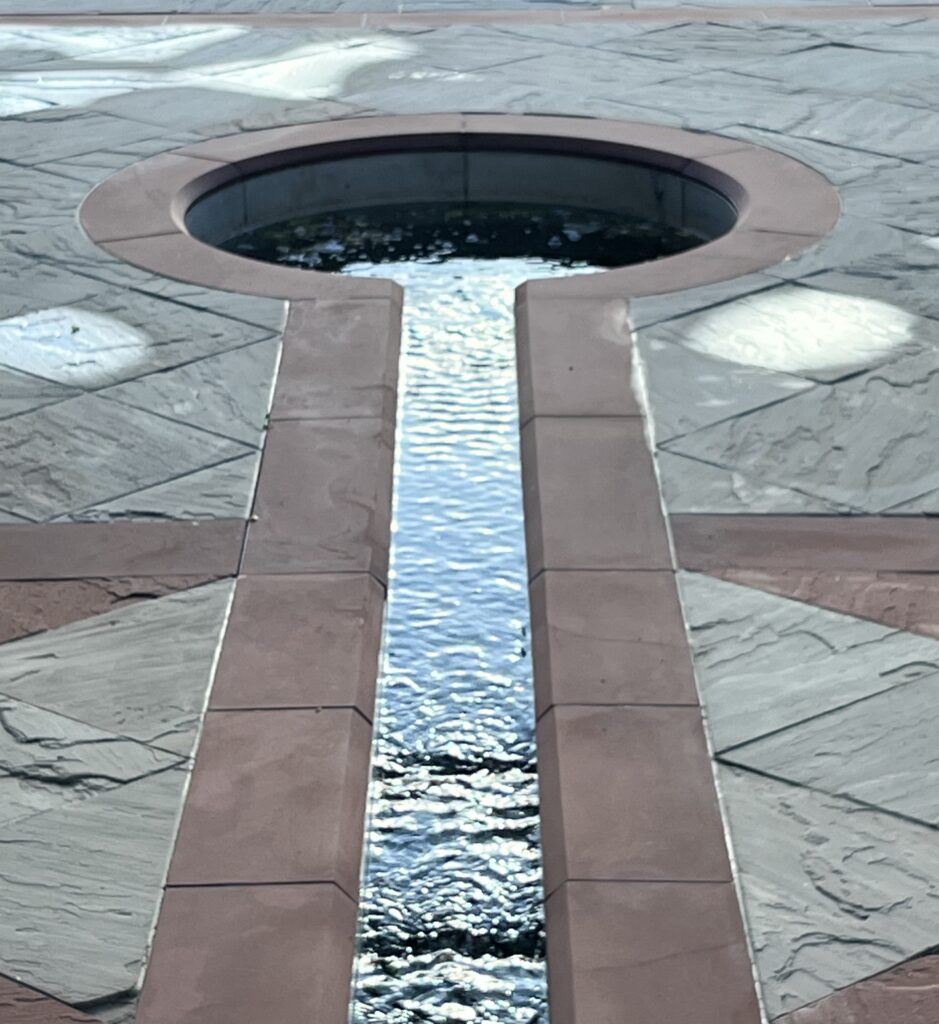
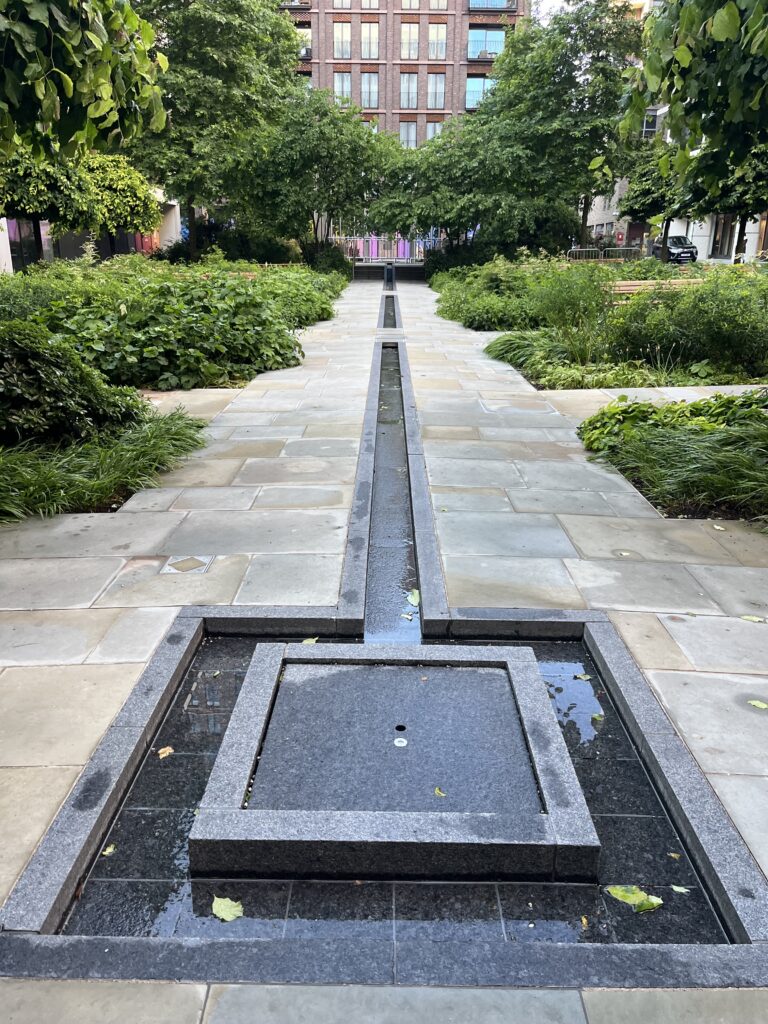
One of the building’s most unusual features is its series of terraces, courtyards, and roof gardens distributed up the building. Water, shade, geometric layouts, and contemplative spaces are recurring themes. The movement and sound of water in fountains, small waterfalls and pools brought particular pleasure.
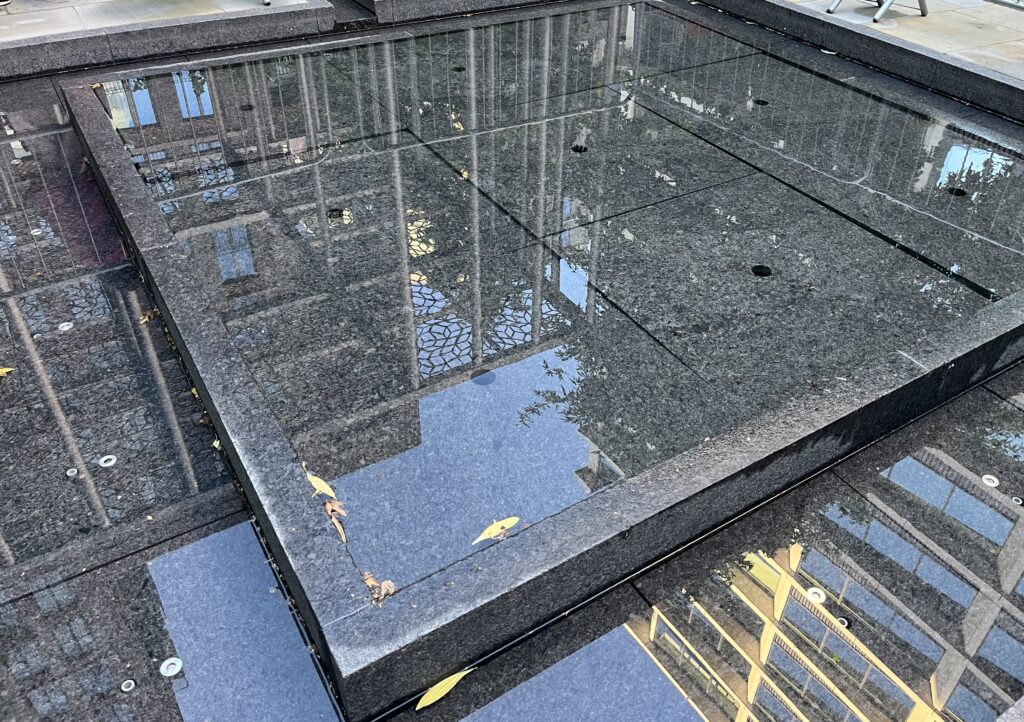
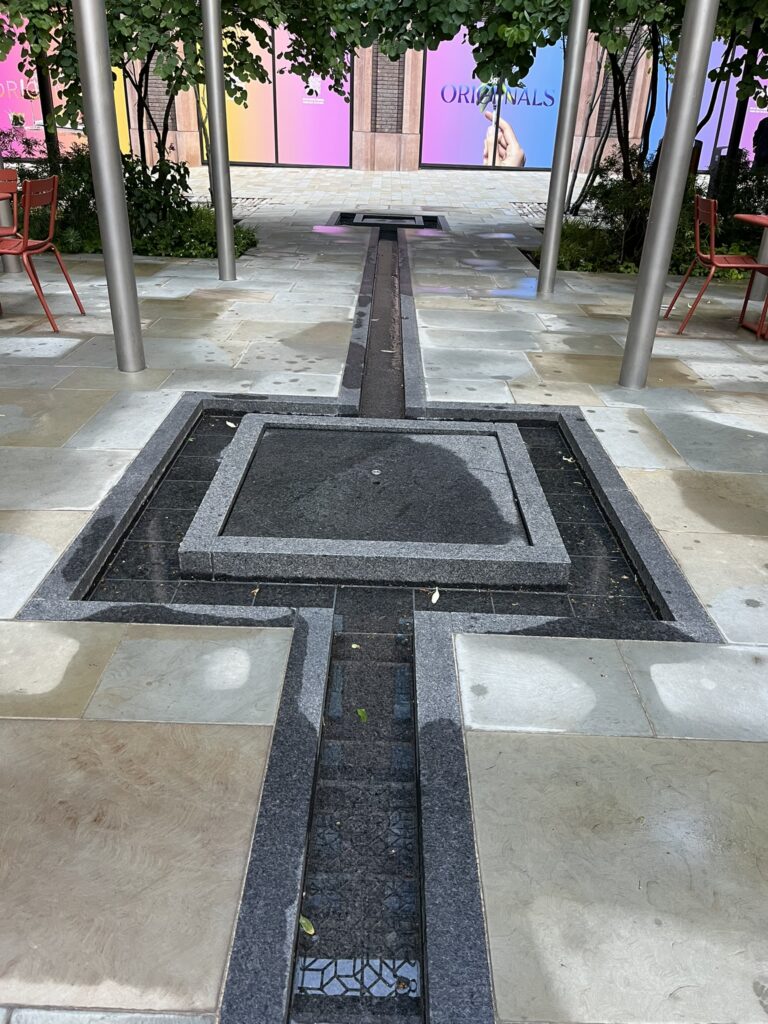
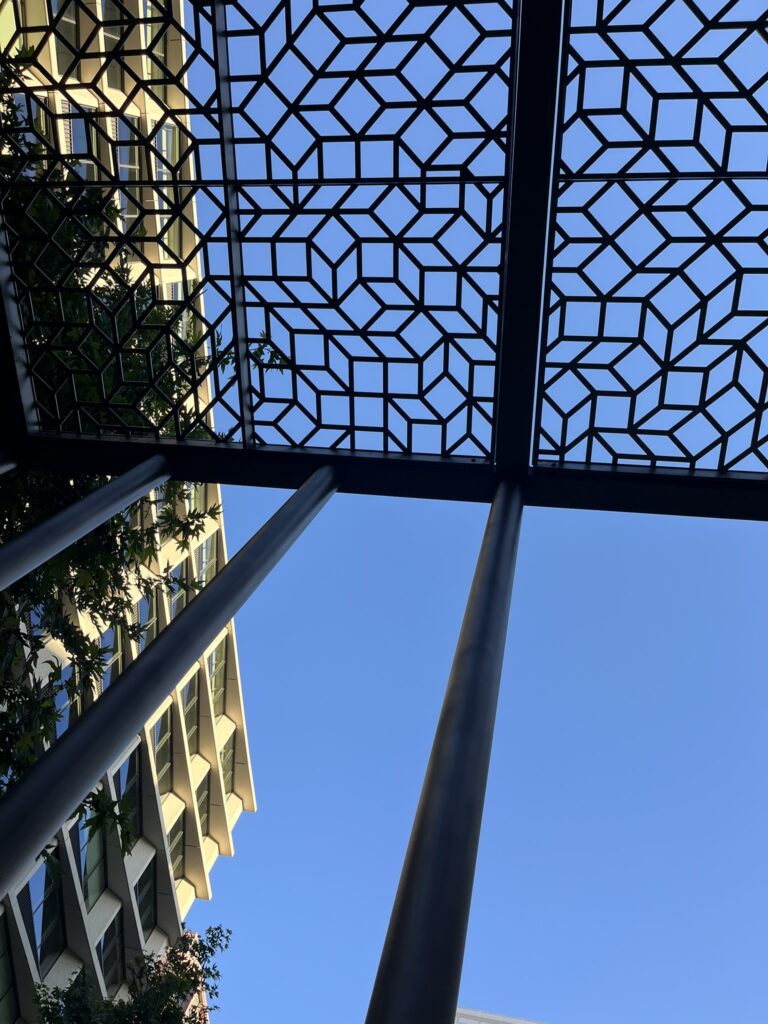
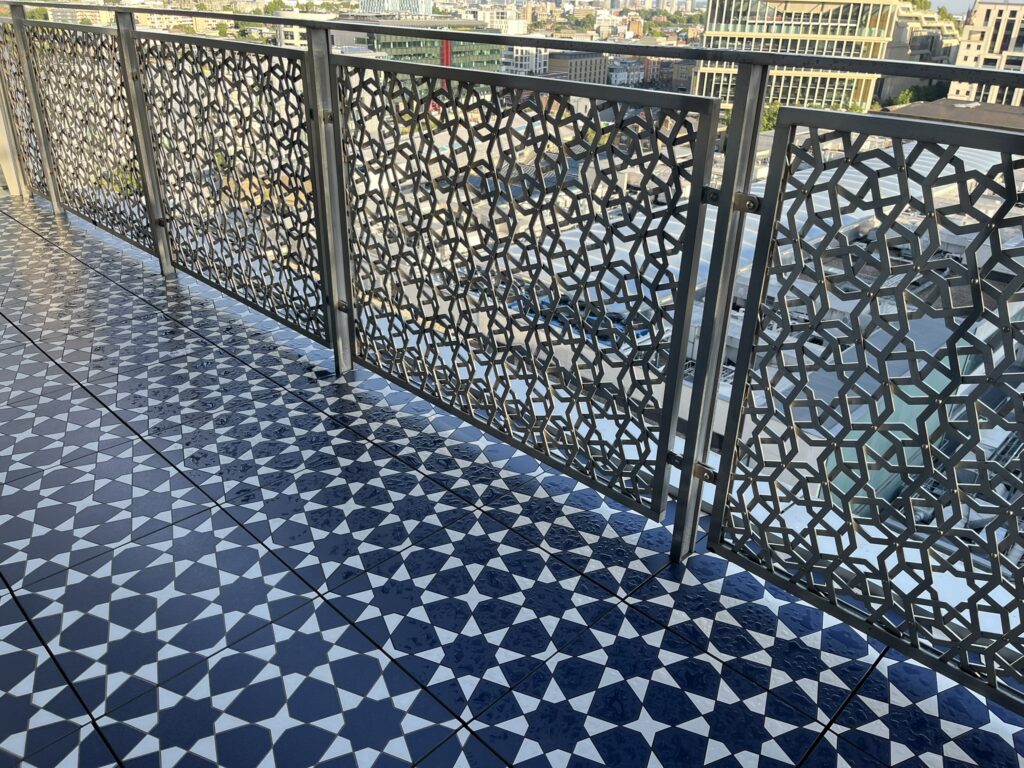
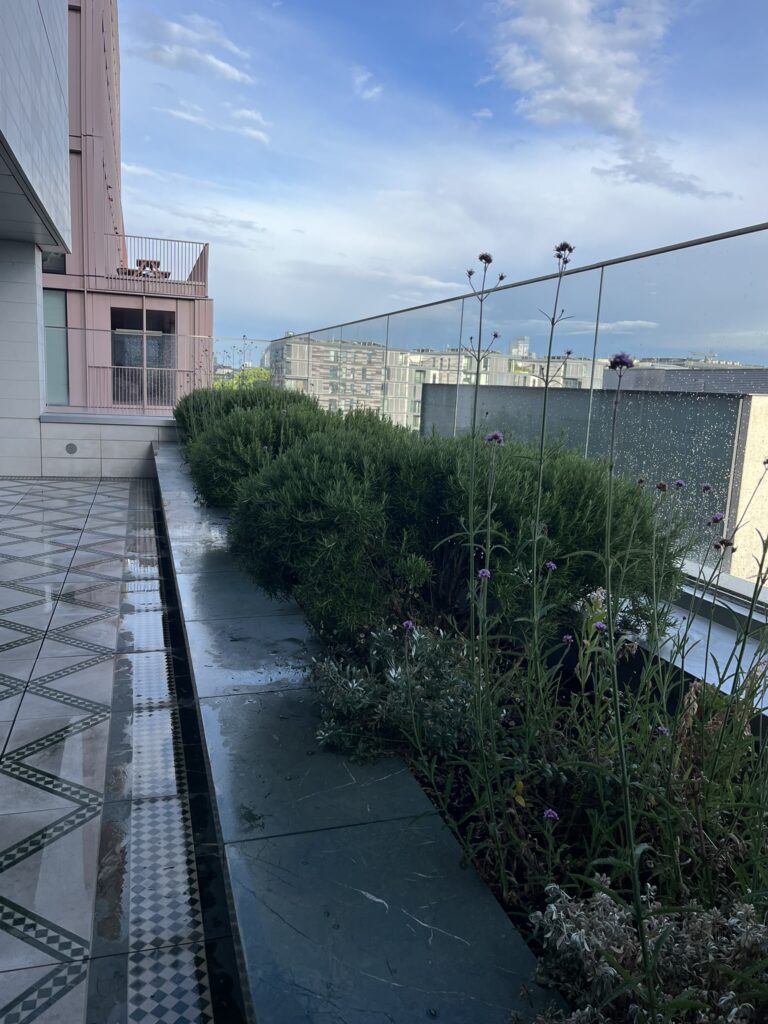
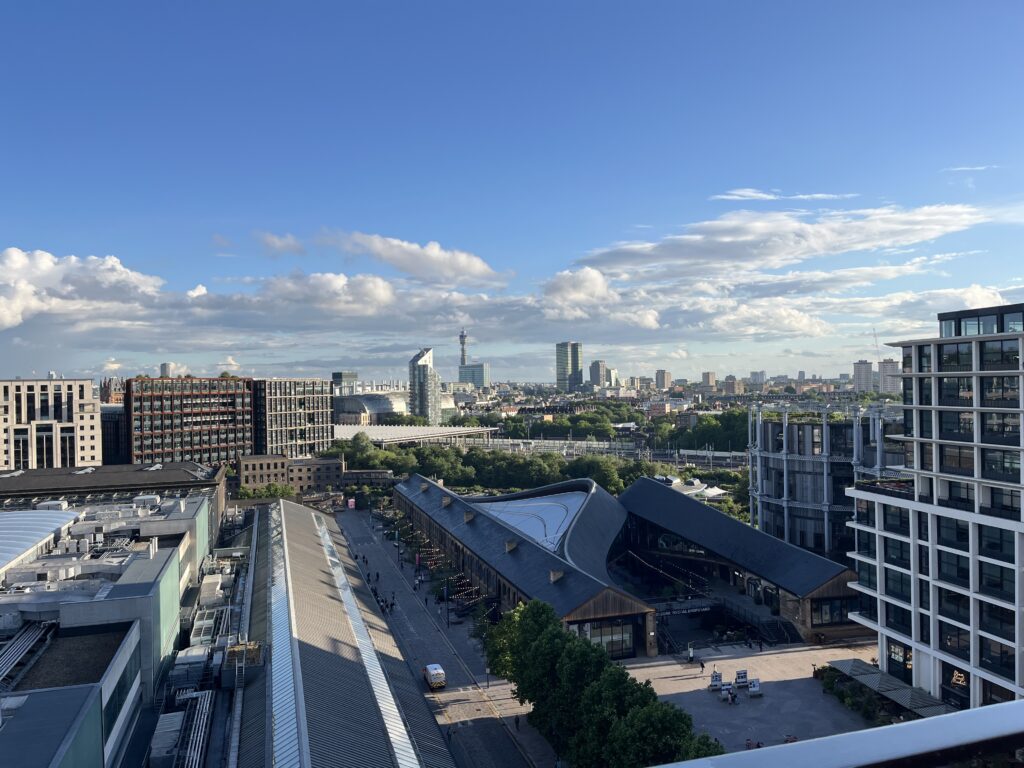
The group was able to stand on a terrace high up the building looking south towards the many familiar buildings of the London skyline set against – by then – a picture book blue sky with scudding white clouds. It was breathtaking.
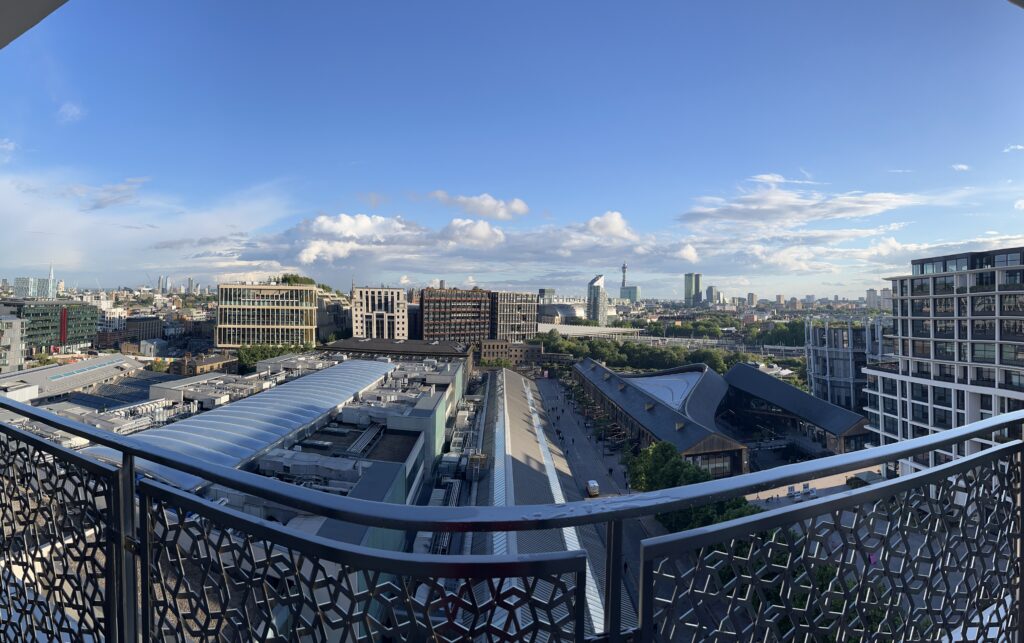
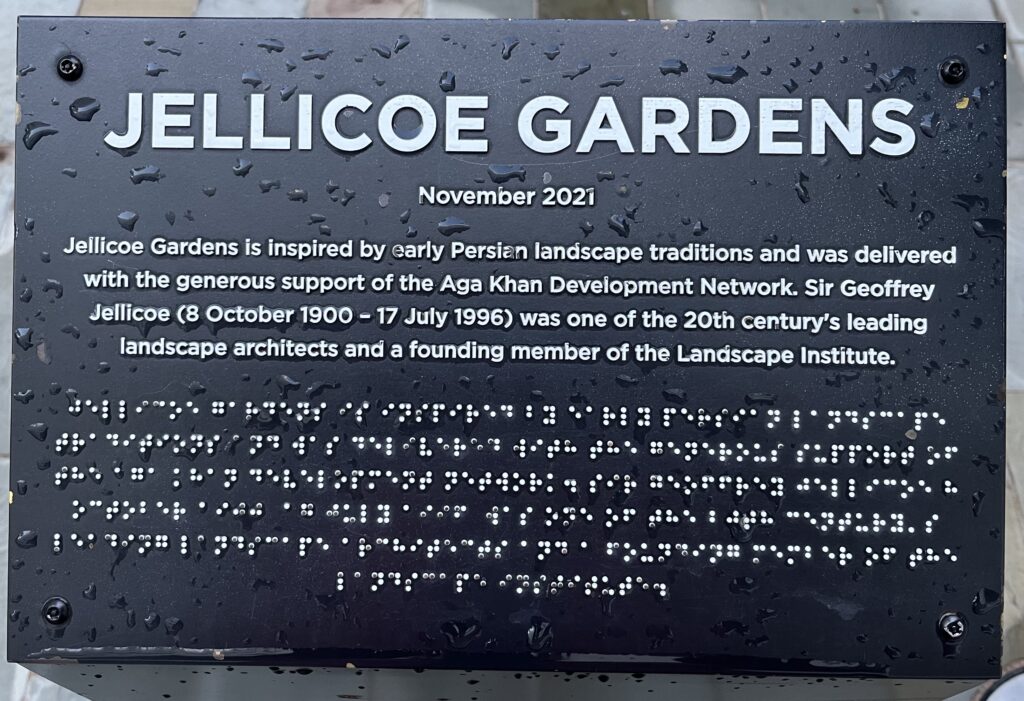
Members were enthralled. One commented that the experience was impactful, admiring the style of gardening and the artwork. Another delighted in standing in a rear courtyard, looking out onto The Jellicoe Gardens at the rear of the building, listening to the chattering of goldfinches.
We are most grateful to The Aga Khan Centre for sharing the beauty of its building and gardens, and for enabling our visit.