Roses and Friends by Ed Flint

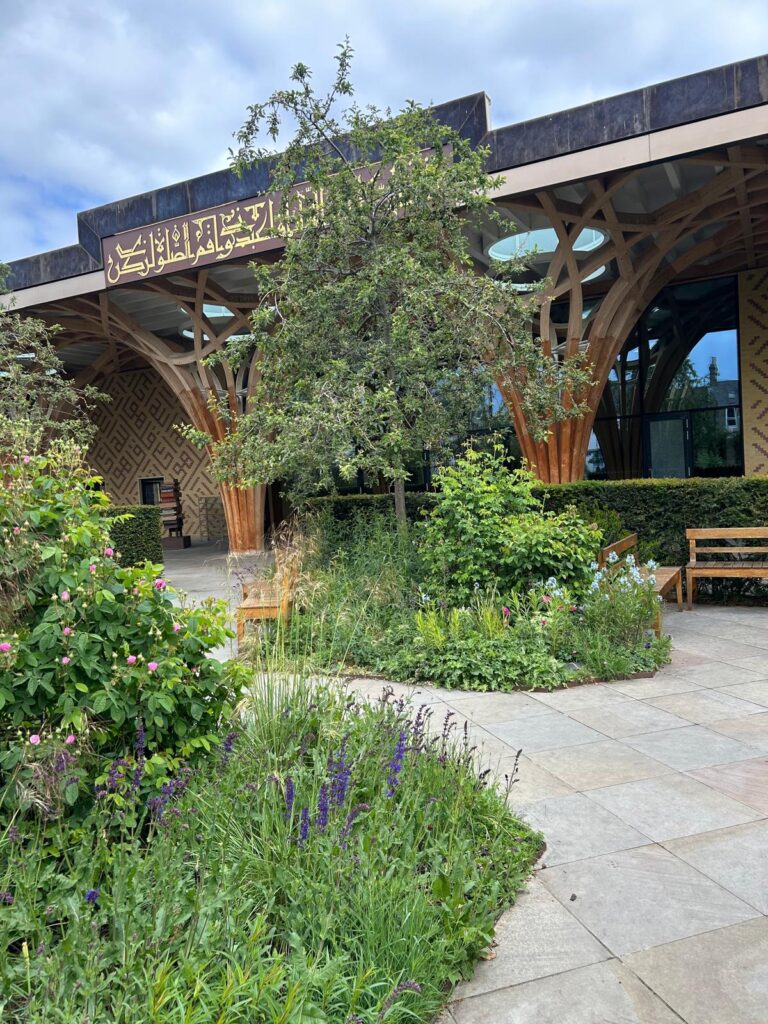
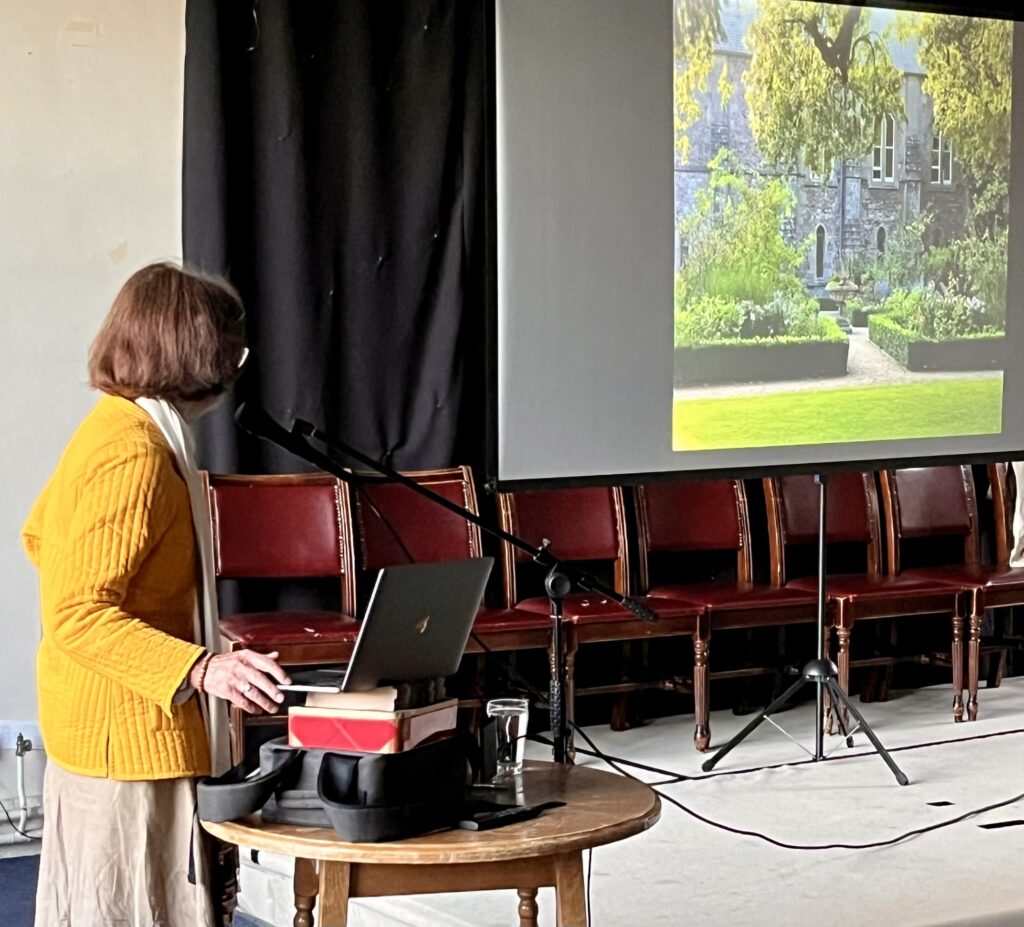
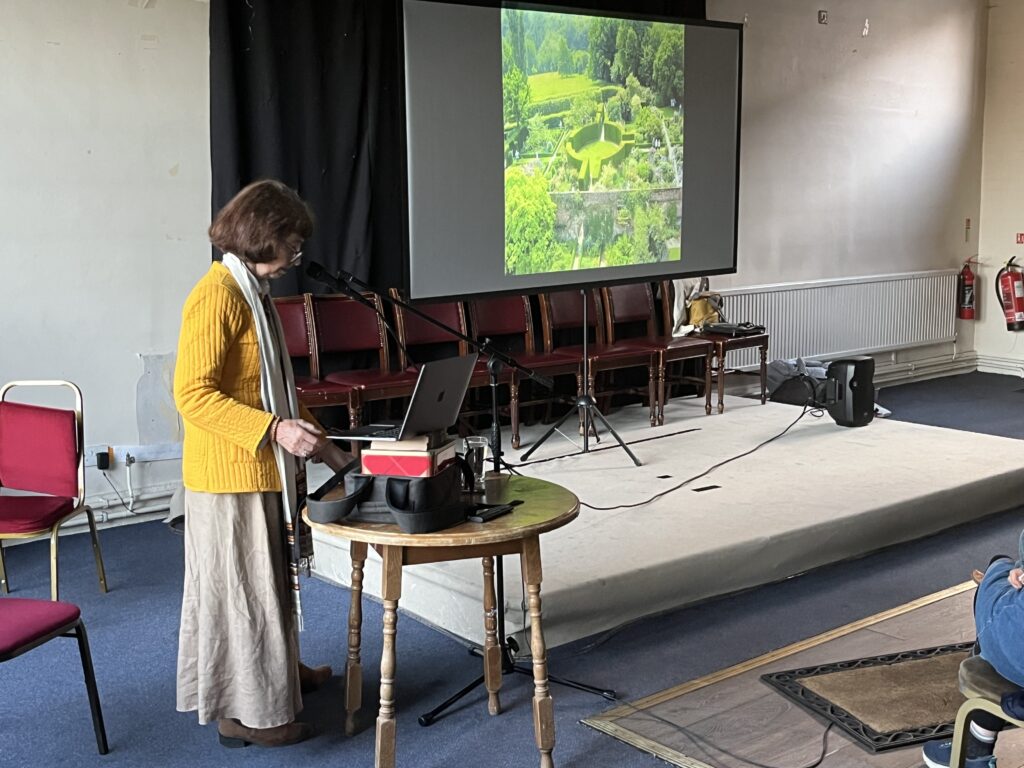
At our March meeting, we were entertained by Ed Flint a Head Gardener, in a large private Sussex garden, who talked about growing roses and particularly about how to display them to their best. The talk was interactive and engaging and members asked questions during the talk and at the end.  He showed us, through some beautiful slides, how to use roses in mixed planting; giving examples of good plants to contrast with or compliment the colour of different roses.   Most importantly he gave examples of how the structure and shape of accompanying plants can be used to show off the roses. 

His first few slides showed the unattractiveness of rose gardens when they are grown as a monoculture with no other plants – although pretty when in bloom – they do not look good in winter and their ankles & legs (as Ed called them) are exposed.  In addition they are prone to more disease.  He recommended growing roses in groups of three and using bended hazels or bamboo to grow the stems across so that they flower more along the stems and they look impressive.   

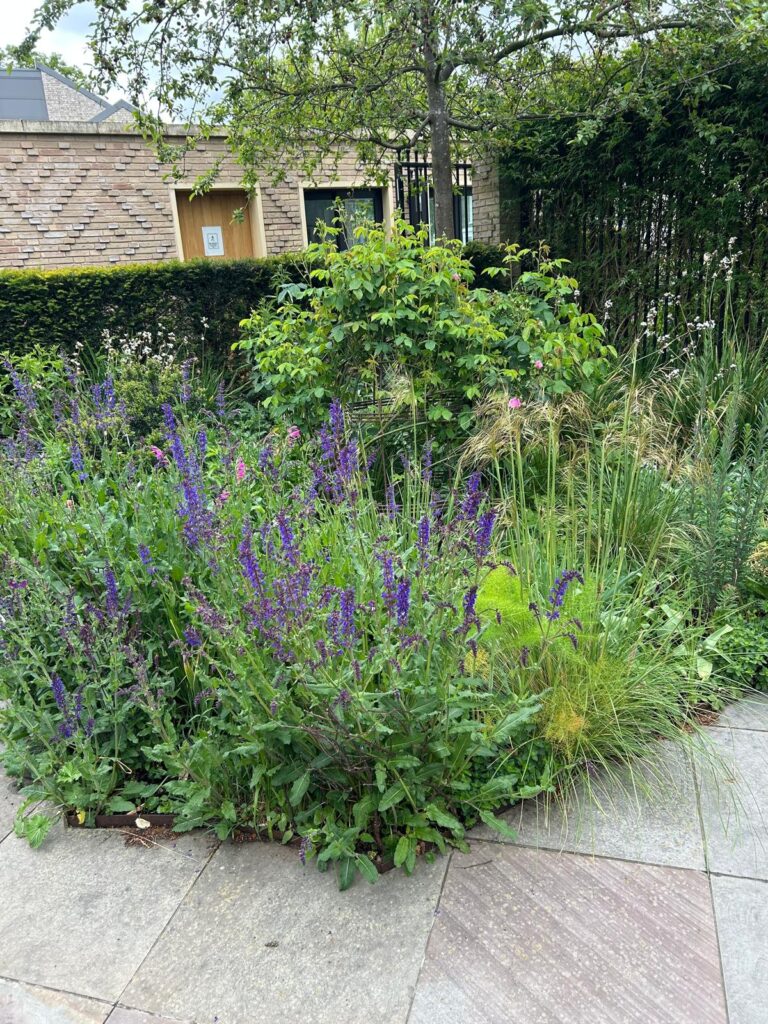
In terms of colour Ed used as examples blue plants like Salvia, Nepeta and Lavender to compliment with roses as there are no true blue roses. He recommended using low growing plants to cover the lower stems of a rose such as Saxifrage, Erigeron (which has a schedule 9 notice), Forget-me-nots and Geum.  Ed made the point that, when deciding which plants to plant with roses, structure shape and texture are more important than colour.  He quoted Beth Chatto, who he knew well, who said think of the garden as a city roofscape with different shapes – tower, spire, dome, pitched & flat roofs and allow plants to echo that view.  He then showed us some beautiful slides of plants echoing some of those shapes, like Delphiniums, Euphorbia, Eremus, Nigella, Anthericum, Larkspur and Opium Poppies. 

To view the full list of Ed’s slides with the name of the roses and their accompanying plants click on the link below.

Roses and Friends

Horatio’s Garden at Stanmore

Volunteer Liz and Lily Schleiker Blythe

Lily Schleiker Blythe, the Head Gardener at Horatio’s Garden, Stanmore Hospital, gave a fascinating talk to the February meeting of Aldersbrook Horticultural Society.  She told us how she gave up a career in TV production to retrain as a gardener.  She had always been interested in nature and as a small child, helped her grandparents on their allotment.  Lily trained at Capel Manor and as part of the WRAG (Work & Retrain as a Gardener) scheme, was able to obtain a number of training opportunities in lovely gardens, including volunteering at Tom Stuart Smith’s Garden at Serge Hill.  She then worked with Ashley Edwards at Horatio’s Garden, Stanmore and when he moved on to work for Crocus Plants, she took over his job as Head Gardener.

Lily explained that each of Horatio’s gardens are attached to Spinal Injury Units.  Spinal injuries are life-changing, with one injury occurring every 2 hours and 4,700 spinal injuries a year.  There are 11 specialist centres in the UK; people with spinal injuries are likely to be in hospital for between 3 & 9 months and many longer than a year – there is a 4-fold risk of suicide and patients are likely to develop depression and anxiety.  The opportunity to go outside into a garden is an attempt to address those issues

Horatio Chapple

Horatio’s gardens were started in memory of Horatio Chapple, who, as a schoolboy, volunteered at the Spinal Unit at Salisbury Hospital – his ambition was to be a Doctor.  In 2011, aged 17, Horatio was killed and it was decided to set up a garden in his memory at the Spinal Unit at Salisbury Hospital and donations poured in.  This first garden was designed by Cleve West and, based on its success, a national charity – Horatio’s Gardens was set up.  There are 11 spinal units around the country – eight gardens have been built, with the ninth now under construction.  After Salisbury, a garden was created in Glasgow by James Alexander Sinclair, followed by a build by Jo Swift at Stoke Mandeville and one by Bunny Guinness at Oswestry.  Others are in Cardiff, designed by Sarah Price, Belfast, designed by Andy Sturgeon, Sheffield, designed by Charlotte Harris (who spoke to the AHS in February 2025 about the Sheffield Garden). The 9th garden is being created in Middlesbrough by Pollyanna Wilkinson. 

The garden in Stanmore was designed by Tom Stuart Smith and was opened in 2020.  It contains 10,000 plants and 336 trees and shrubs. The garden is large, 2,000 square metres and it consists of pods where patients can go, a glasshouse and beautifully planted borders at waist level so that patients can help maintain the gardens.  The paths are especially made to take wheelchairs and hospital beds.  Patient – led activities take place in the garden.

Lily and Liz set up a stall of crafts, made by patients

One of the 35 volunteers at Horatio’s Garden at Stanmore, Liz, spoke about how she got interested in volunteering at the garden at Stanmore; gardening and helping with activities.  Patients talk about the peace and quiet and sanctuary the garden gives them, as well as providing a lovely space for families to visit. Because the units are sparsely spread around the country, 84 miles is the average distance travelled by visitors to the spinal units. Research into the impact of the gardens has found that for 71% of patients, the garden provides a distraction from pain.

You can become a friend of Horatio’s garden for £10.00 a month – there are 2 Open Days a year.  We are delighted to report that a stall selling goods for Horatio’s Garden at our meeting raised £600.00. 

AHS Visit to RHS Wisley

On Friday 23 January 2026, a coach load of AHS members plus guests, visited

Although it was another grey January day when a coachload of AHS members visited RHS Wisley – at least it didn’t rain! 

Most of us were fortunate to be taken on tours of the extensive flagship RHS garden.  Our tour leader was a very experienced and knowledgeable guide – she took us to the area of the garden known as Oakwood – the original section of the garden – created by George Fergusson Wilson in 1878. He was a keen horticulturalist and established the Oakwood experimental garden with the idea of making difficult plants grow successfully. 

Oakwood was gifted to the RHS by Sir Thomas Banbury who had bought Oakwood from Wilson in 1903. He had been advised to give the garden to the RHS by the Essex gardener, Ellen Wilmott – she of the flower named as Miss Wilmott’s ghost. 

We were able to view many very old trees in this section of the garden as well as a new garden building dedicated to the early RHS founders including Ellen Willmott.  We also admired the winter planting in the Winter Walk, including beautiful red stems of the Cornus and Salix and the beautiful small pines like Pinus Mugo.

  The red bark of the Prunus serrula was shining in the winter light and the white stems of the bramble Rubus cockburnianus made a beautiful picture.  In this woodland garden Snowdrops, Hellebores and Cyclamen coum lined the woodland floor.

The rock garden was looking good and the new borders designed by Piet Odulf were full of grasses and seedbeds.  Exquisite alpine plants on display in the Alpine house were admired by everyone – they are selected daily to show the best examples of Alpine plants. 

Many of us were able to buy the plants seen on our tour in the Nursery and gifts from the well-stocked shop.  

Everyone enjoyed the day and we’re looking forward to more trips in April, May and June 2026.

The Old Laboratory was worth a visit. Apparatus was displayed that had been used to experiment with preservation and advancement of growing.